How Does Leftover Food Turn into Electricity?
Where do the leftovers discarded by Yichang residents every day end up? The answer is not a landfill, but a food waste recycling plant in Sunjiawan, Mopanxi Village, Xiaoting District. Covering approximately 31 mu, or 2.07 hectares, the facility was developed and is operated by Yichang Urban Development Group. It began operations on September 28, 2023, with a Phase I design capacity of 200 tonnes per day. At full capacity, it can process 73,000 tonnes of food waste annually. Those figures may sound abstract, but a walk through the plant makes the process easy to understand.
Early each morning, enclosed collection vehicles follow fixed routes through residential communities and restaurants. Each bin is weighed and its code scanned before loading, and the vehicle passes over a weighbridge again upon arrival at the plant. The source and weight of every load are recorded in the system. This procedure matters: tracking where food waste goes helps prevent it from being diverted into the production of illegal cooking oil. Over the years, Yichang has built a substantial collection network, with thousands of dedicated bins and dozens of collection vehicles. Scheduled pickups at designated locations keep urban food waste moving out every day.

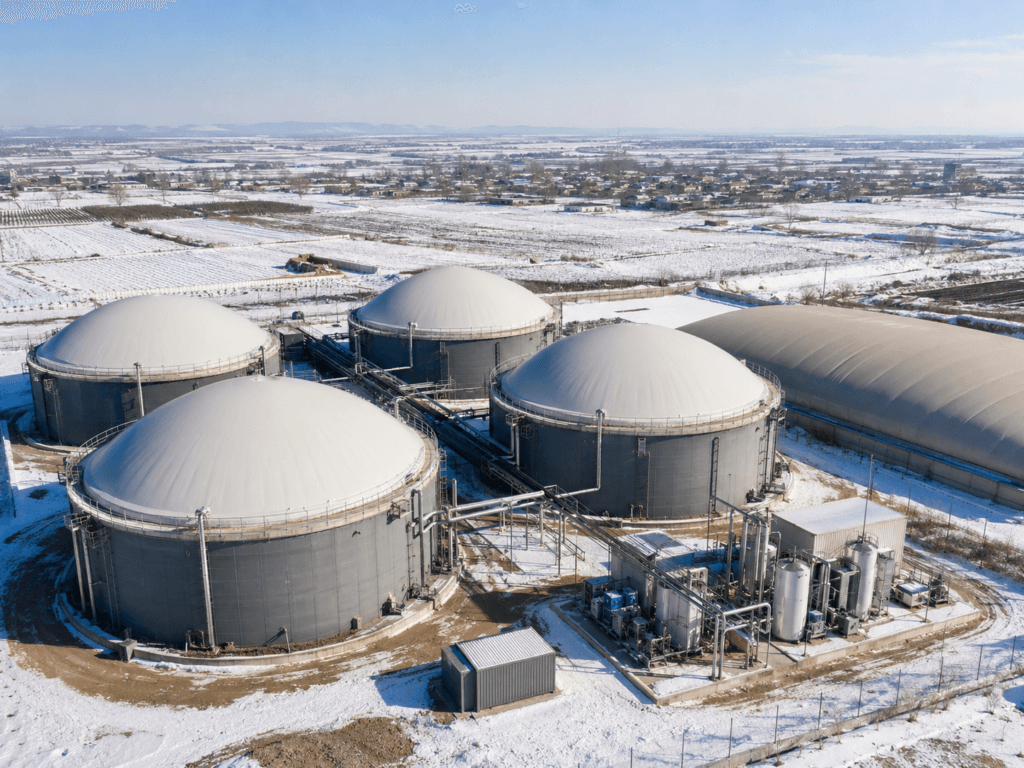
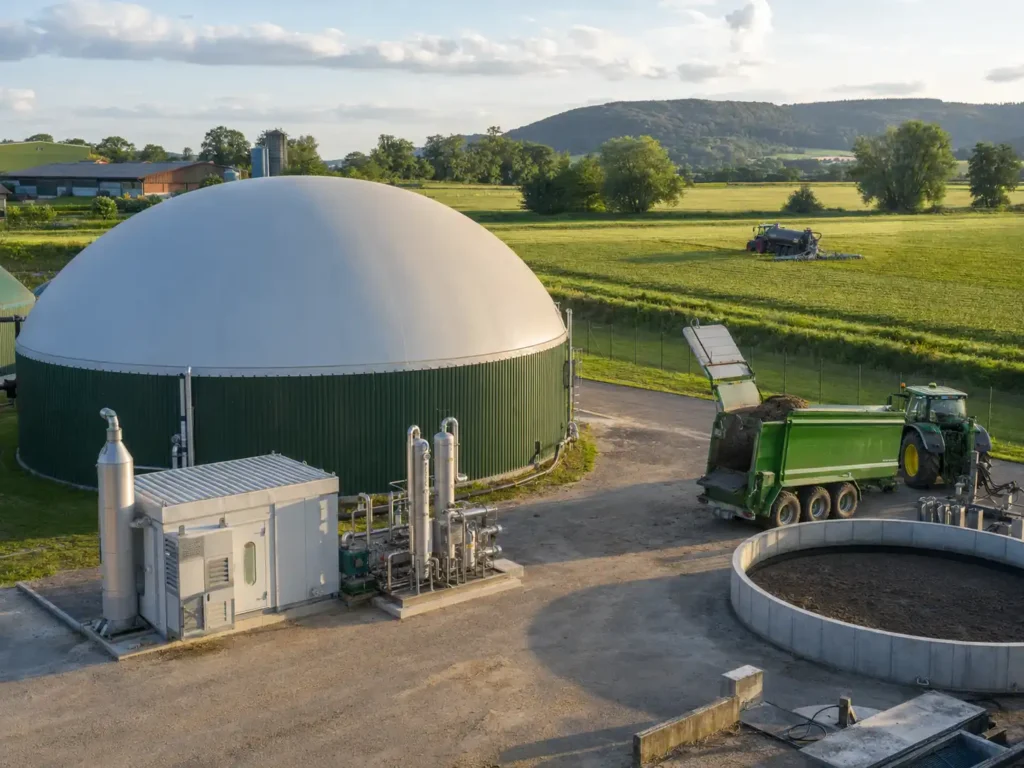
Once unloaded, the waste enters a fully enclosed processing line. Bags are opened, and sorting equipment removes plastic bags, glass bottles, metals, and other unwanted materials. The waste is then crushed, pulped, screened for grit, heated, and subjected to three-phase separation. The recovered oil fraction, known as crude grease, is sold for biodiesel production. The remaining slurry enters anaerobic digesters, where microorganisms gradually break it down through stages including hydrolysis, acidification, and methane production, generating biogas. The digestate is then separated into two streams: solid residue undergoes aerobic composting to produce organic fertilizer, while the liquid fraction enters the wastewater treatment system. It passes through equalization, flotation, nitrification and denitrification, and membrane treatment before discharge, once the required standards are met.
The most surprising thing on site is the absence of noticeable odors. The entire process is enclosed, slurry travels through pipelines, and the processing buildings operate under negative pressure, with an air extraction capacity of up to 150,000 cubic meters per hour. As project manager Xiang Qian puts it plainly: “All odorous air is contained.” In practice, odor control matters even more than processing capacity: it determines whether a facility like this can operate smoothly near an urban area.
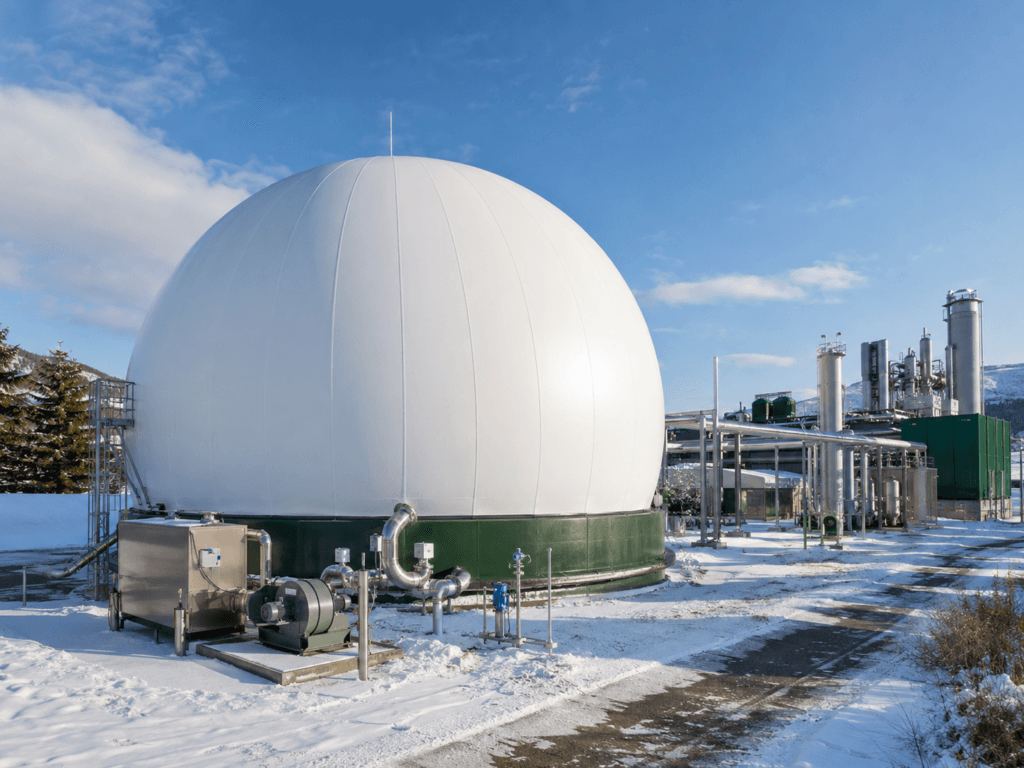
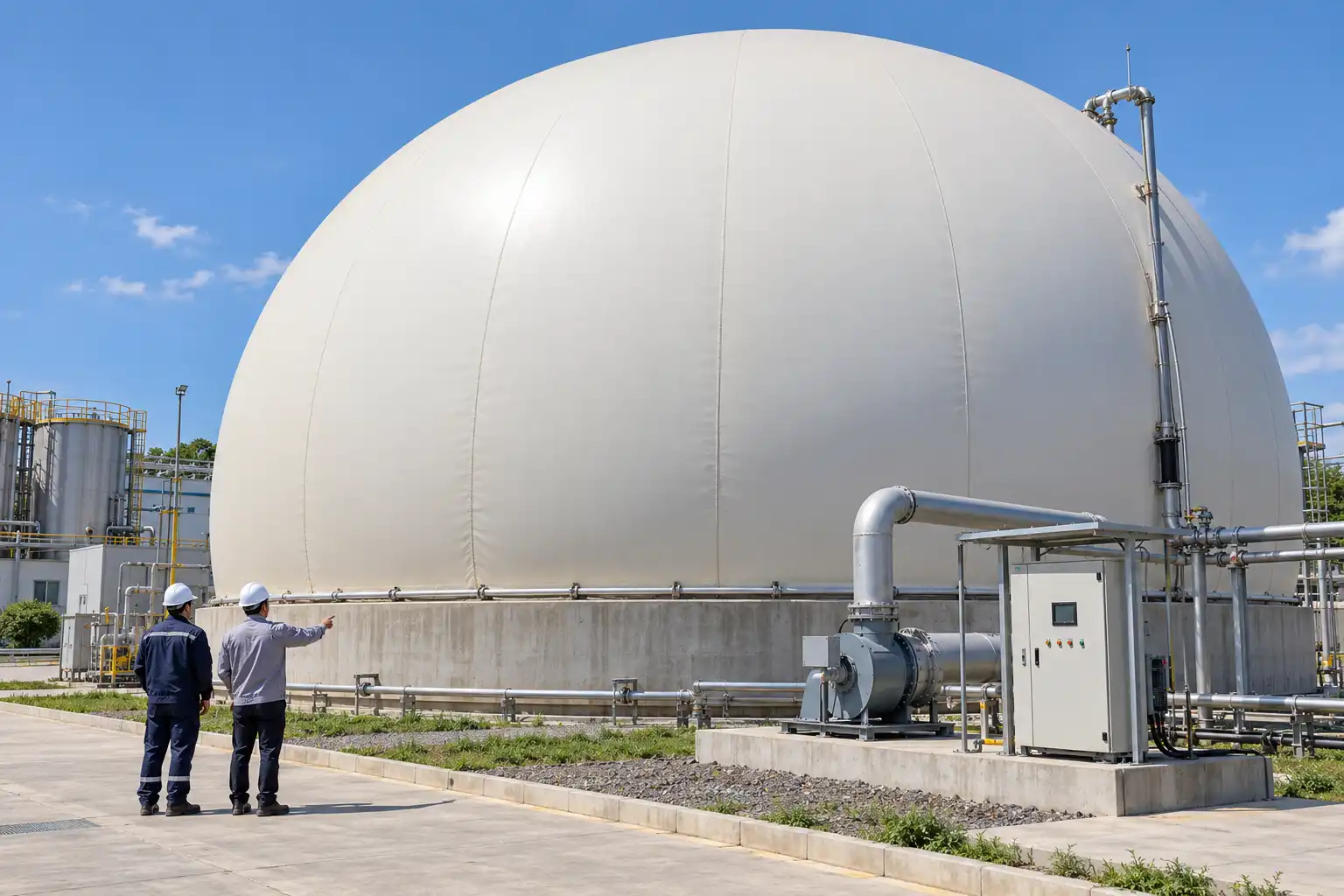
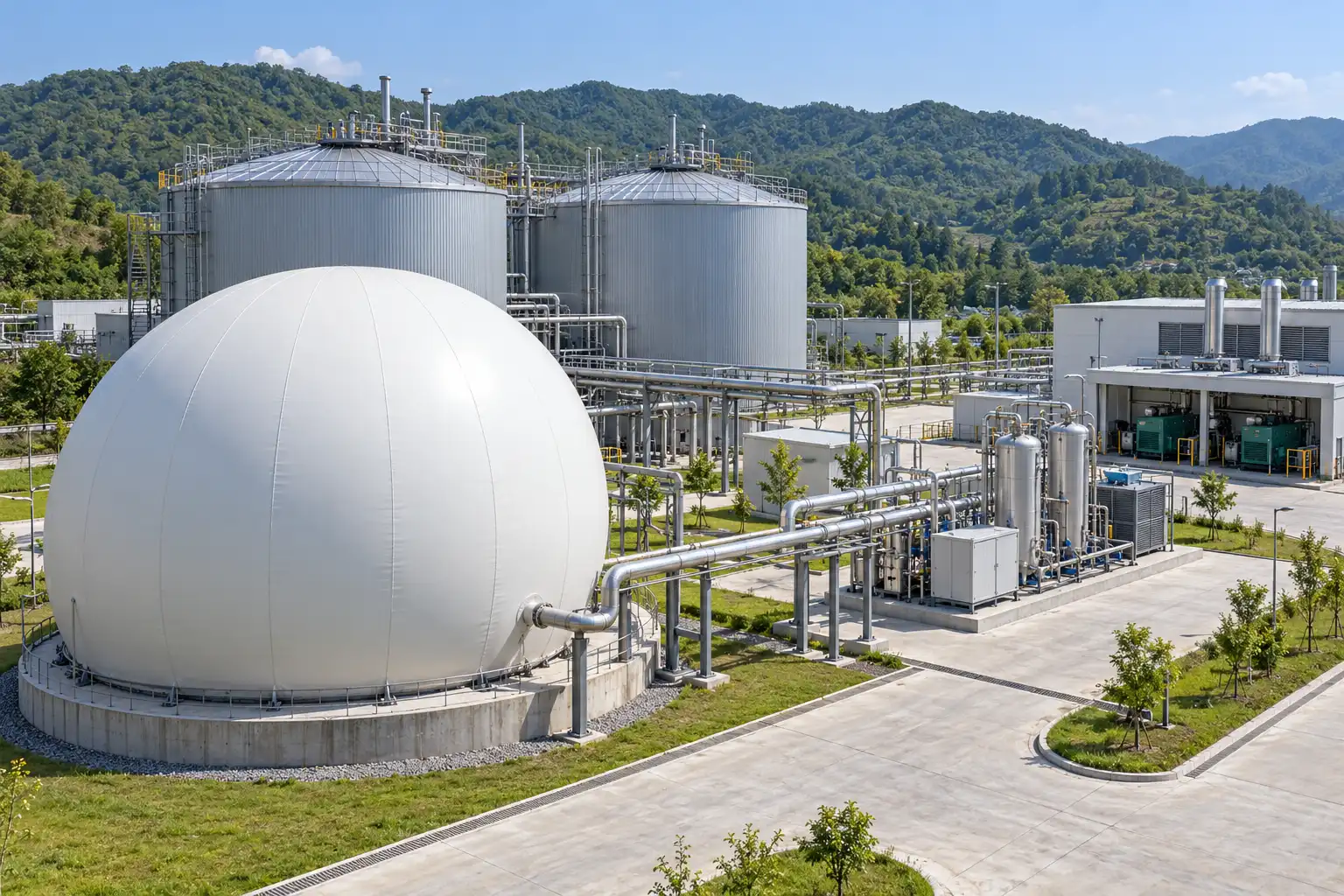
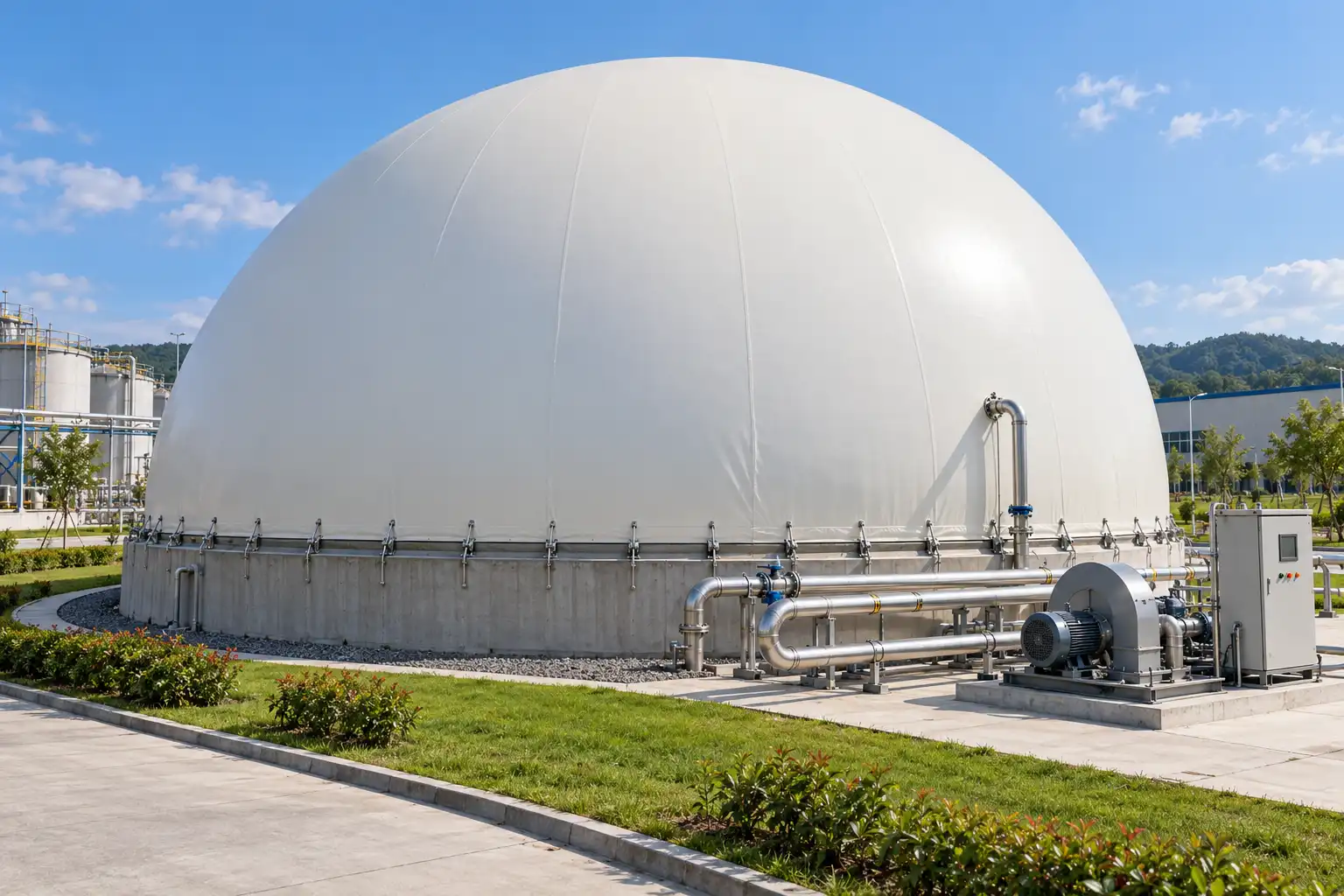
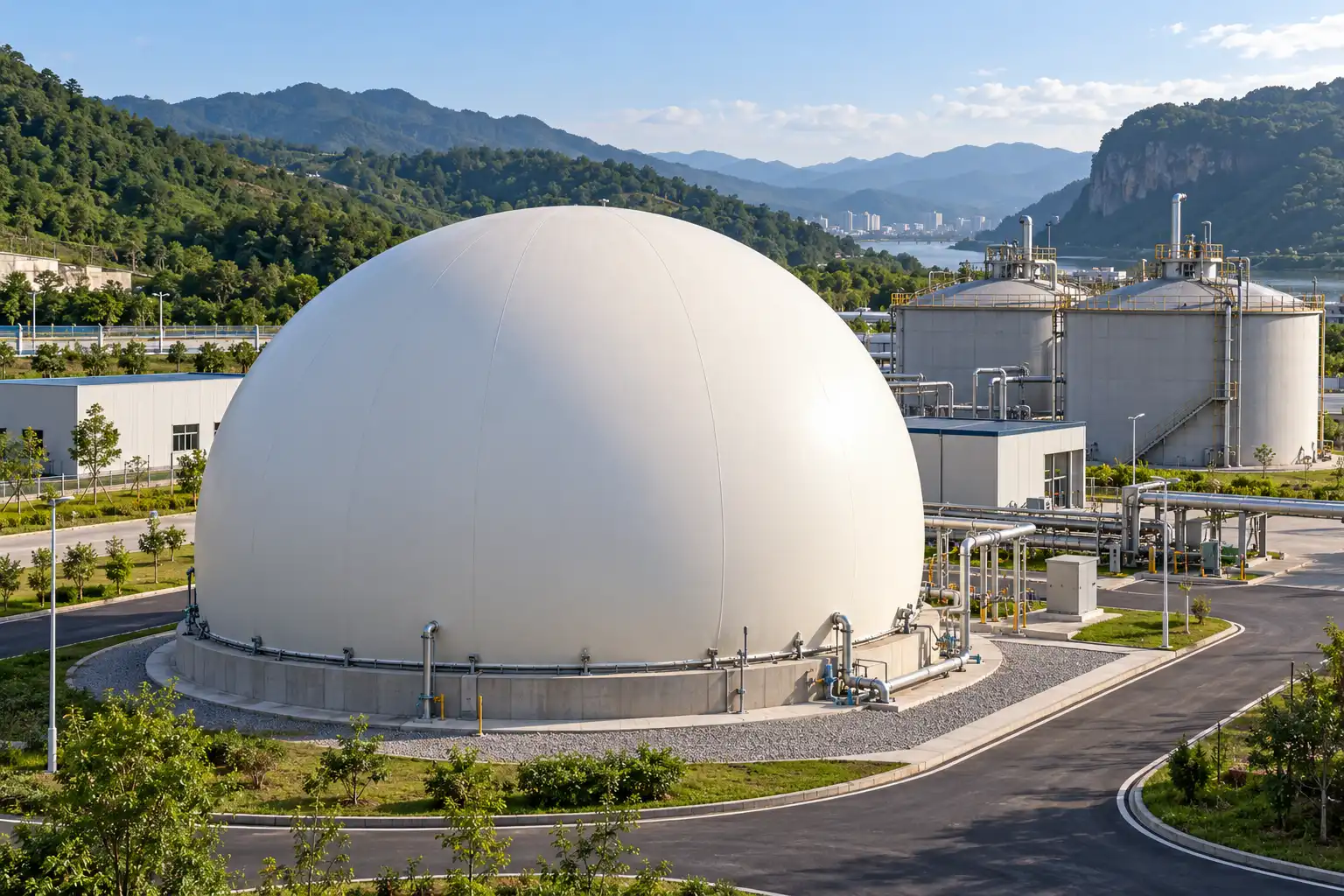
Any discussion of biogas brings us to the plant’s 1,000 m³ gas balloon. It looks like a large, inflated white bag, but it performs a critical role. Gas production from the digesters fluctuates, while the generator sets and boilers require a stable pressure and flow. The gas storage balances these variations: it stores surplus gas when production is high and supplies the shortfall when production drops. It also helps maintain stable pressure ahead of downstream desulfurization and purification. One point is often misunderstood: 1,000 m³ refers to storage capacity, not daily gas production. In engineering practice, gas holders are generally sized to buffer several hours of production, rather than store an entire day’s output. That distinction explains why this one is the size it is.
How much useful energy can this gas provide? According to a public statement from the Yichang municipal government, biogas generated by the project can be used to produce enough electricity to meet the daily household needs of 3,000 homes. Yichang already has around a decade of experience in this field. Public reports on an earlier kitchen and catering waste treatment facility indicated a biogas yield of approximately 100 m³ per tonne of waste, a methane content above 65%, and electricity generation of roughly 2.5 kWh per cubic meter of biogas. The experienced team and the knowledge accumulated through that work have helped the newer food waste project get up and running smoothly.
Of course, these figures need context. The 200 tonnes per day figure is the design processing capacity; actual daily throughput depends on collection volumes, seasonal changes, and how well residents separate their waste. The figure of “daily electricity for 3,000 households” is an estimate based on biogas yield and generator efficiency, and gas yields can vary considerably between different waste sources. Indicators such as the “resource recovery rate” should only be quoted with a clear explanation of how they are calculated. Selling recovered crude grease for biodiesel production is beneficial, but its destination must remain traceable through proper records. These qualifications make the account more credible.
So, returning to the opening question, Yichang’s food waste follows a complete chain: collection and transport, pretreatment, anaerobic digestion, biogas storage and use, fertilizer production from solid digestate, and treatment of liquid digestate to meet discharge standards. Along the way, discarded food is converted into electricity, recovered oil, and fertilizer. The 1,000 m³ gas holder may seem unremarkable, but it is the point in that chain that turns a fluctuating gas supply into a usable energy source.
For a city on the Yangtze River, the benefits are straightforward: less waste sent to landfill, fewer odors released into the air, and less fossil fuel burned. Yichang is the first city downstream of the Three Gorges. Sometimes, putting the commitment to protecting the Yangtze into practice means a plant covering just 2.07 hectares, designed to process 200 tonnes of waste a day—and a large, inflated white gas holder.
If you are planning a food waste treatment or biogas recovery project, contact Qingdao Haiyue to discuss your gas storage requirements. We provide double membrane gas holders, customized design, installation guidance, and after-sales support to help your project achieve stable biogas storage and supply.
RELATED BLOG