Who Says Processing Waste Can Only Be an Environmental Burden?
The large-scale anaerobic digestion project in Guyuan County, equipped with advanced biogas holder and biogas cover systems, has proved otherwise.
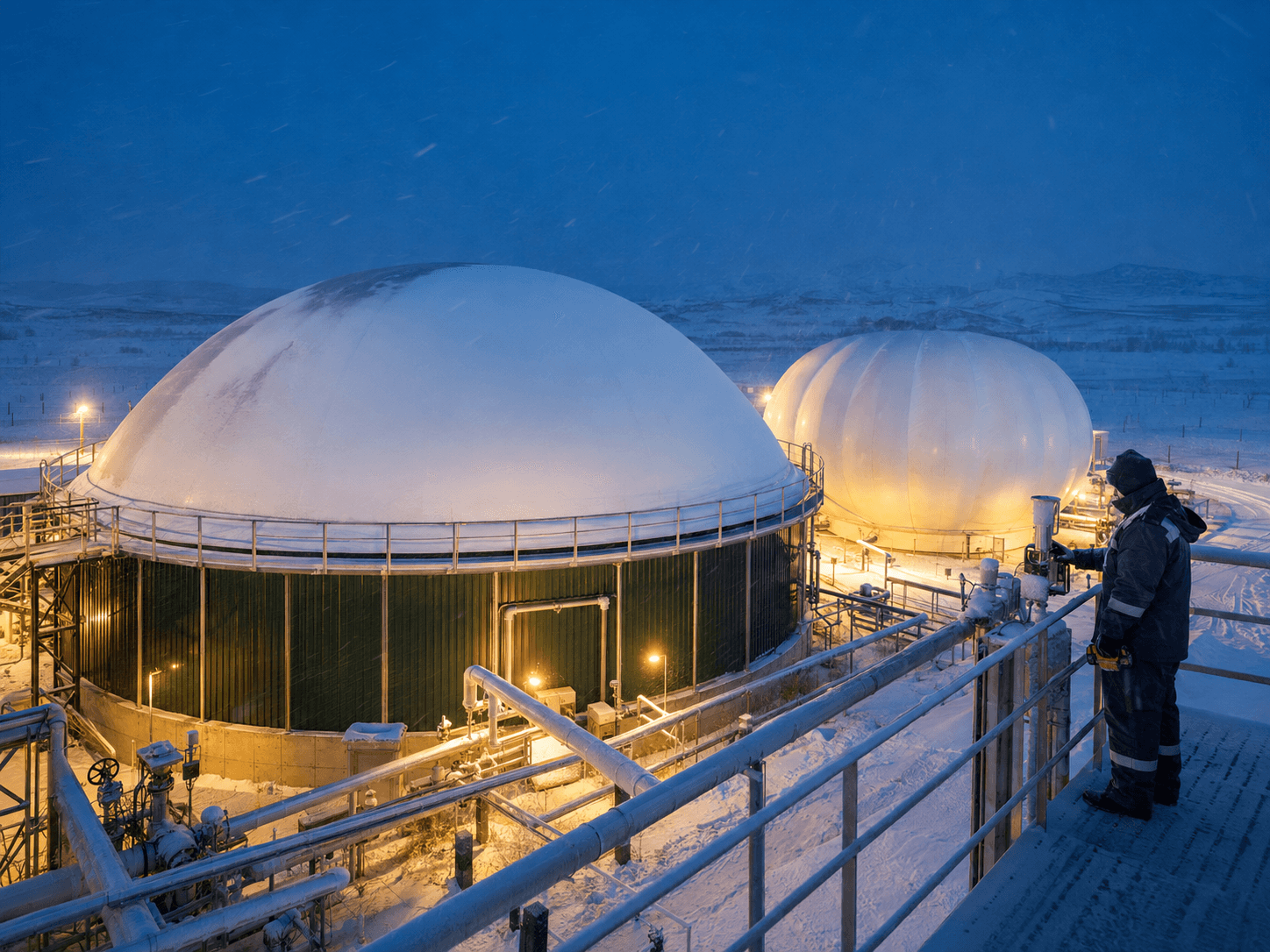
Guyuan County, Hebei Province, China—can a biogas project operate in an extremely cold region where temperatures fall below −40°C? Must the residues and wastewater generated during potato starch processing simply be treated as pollutants?
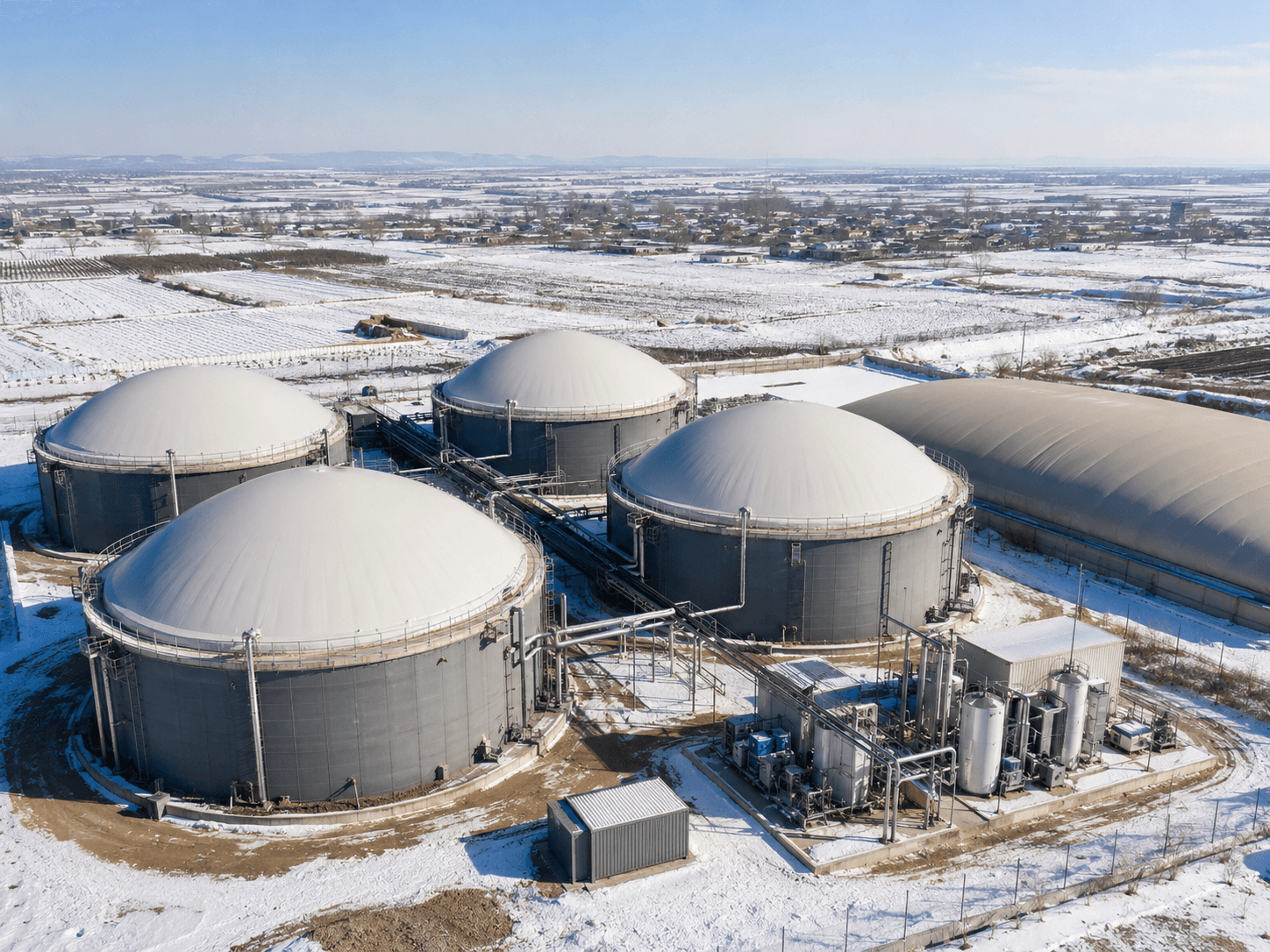
A large-scale anaerobic digestion facility in the Guyuan Economic Development Zone has answered these questions through more than eight years of continuous operation. Four 6,000 m³ anaerobic digesters, combined with an advanced biogas holder system, produce more than 26,000 m³ of biogas every day.
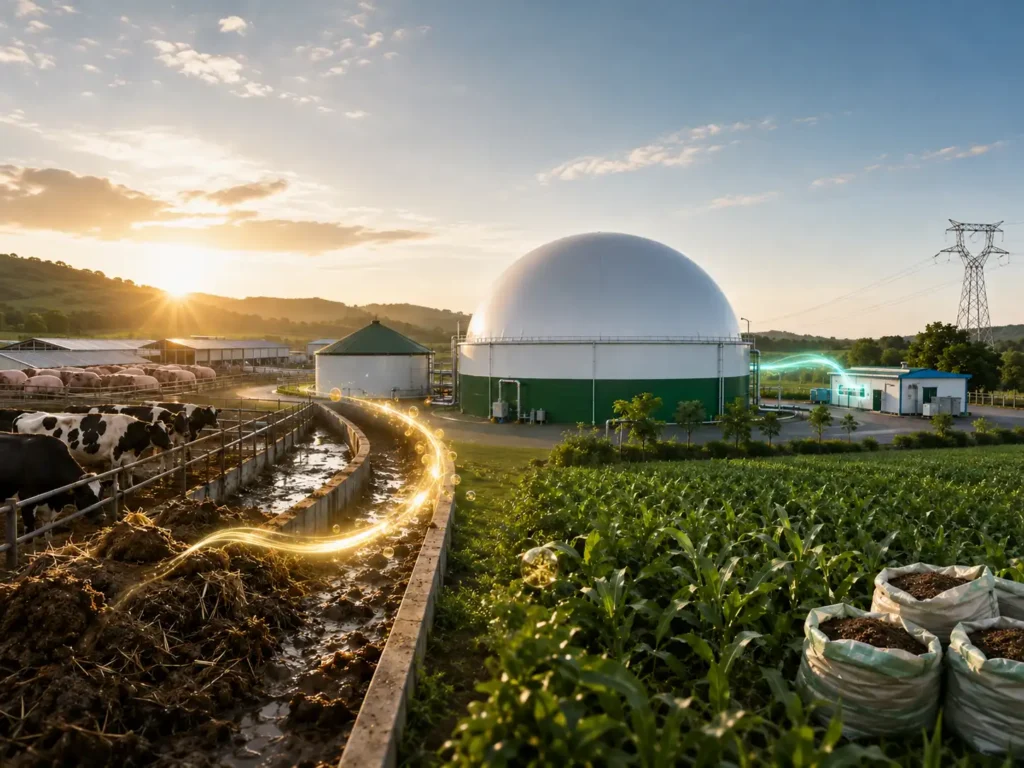
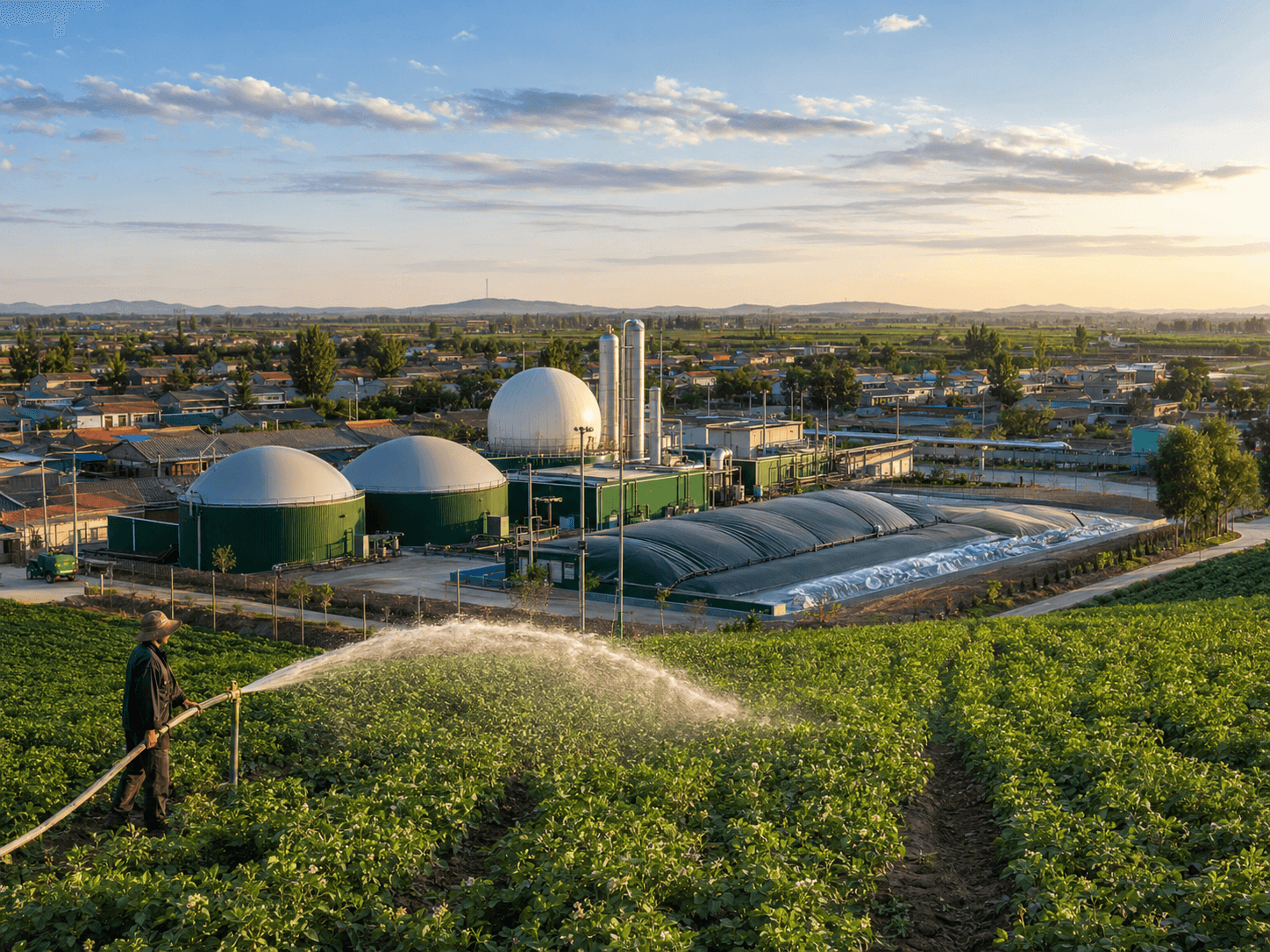
This is not a theoretical concept—it is proven operational data accumulated over eight years. After purification and upgrading, the biomethane is supplied directly to residents in Guyuan County. Meanwhile, the digestate is returned to farmland to improve soil quality. In this way, a complete circular system—from processing waste to clean energy and agricultural reuse—has been successfully established.

How Are Potato Residues Converted into Biogas?
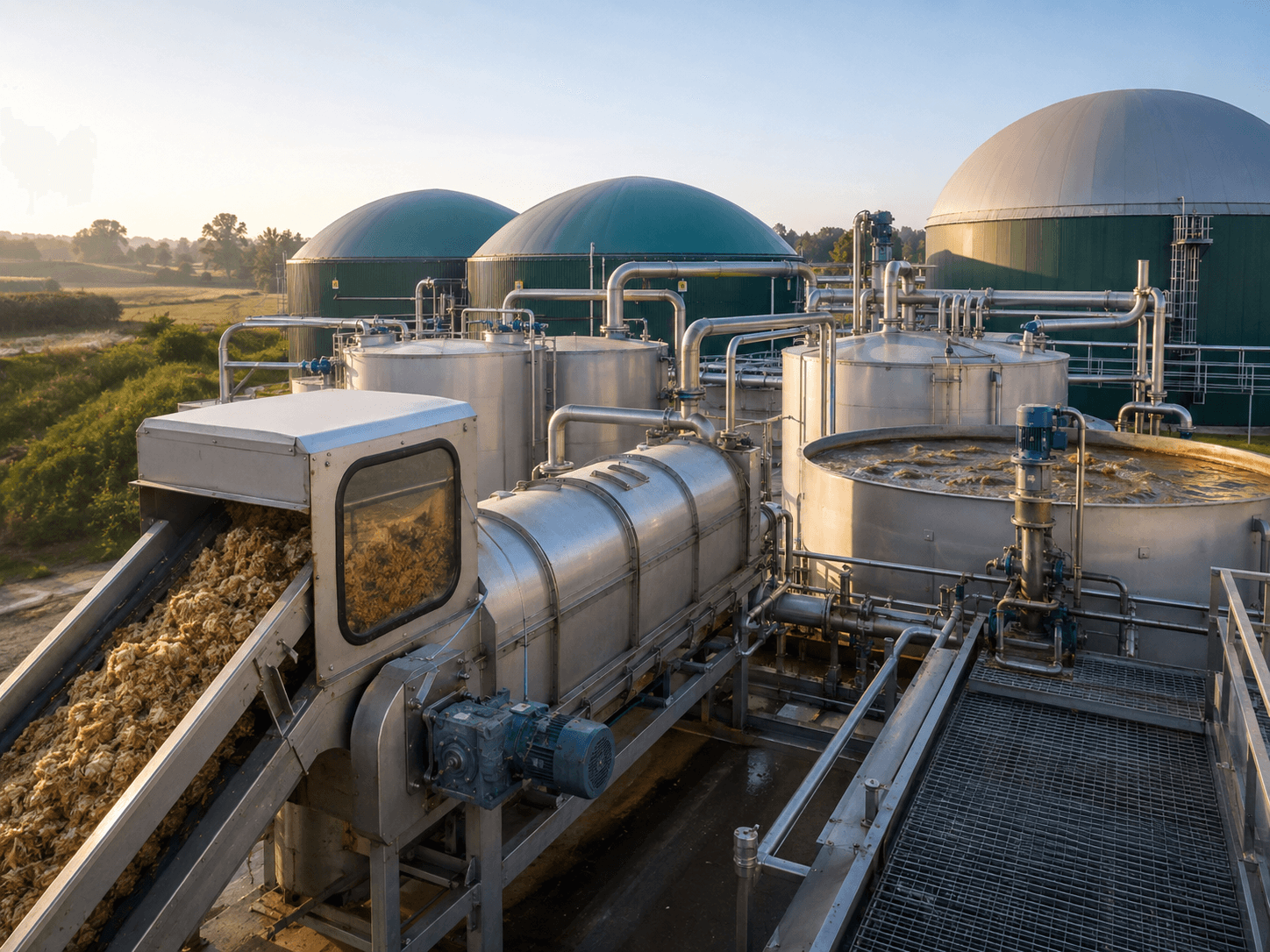
How can the wastewater and solid residues produced during potato starch processing be transformed into biogas?
The answer lies in a carefully designed closed-loop process:
Hydrolysis and acidification → digestate recirculation and slurry homogenization → high-efficiency anaerobic digestion → biogas purification and upgrading → agricultural utilization of digestate
Every stage has been repeatedly tested and optimized to ensure reliable coordination throughout the entire process.
Should high-solids potato residues be diluted with fresh water? Not in the Guyuan project. The potato residues have a solids content of approximately 13%, and the project uses recirculated digestate to dilute and homogenize the feedstock. As a result, the entire feedstock preparation process consumes no fresh water.
This is about more than simply reducing operating costs. The project is exploring the technical limits of stable anaerobic digestion under higher solids concentrations. While achieving internal water recycling, it is also continuously pushing the boundaries of anaerobic digestion technology.
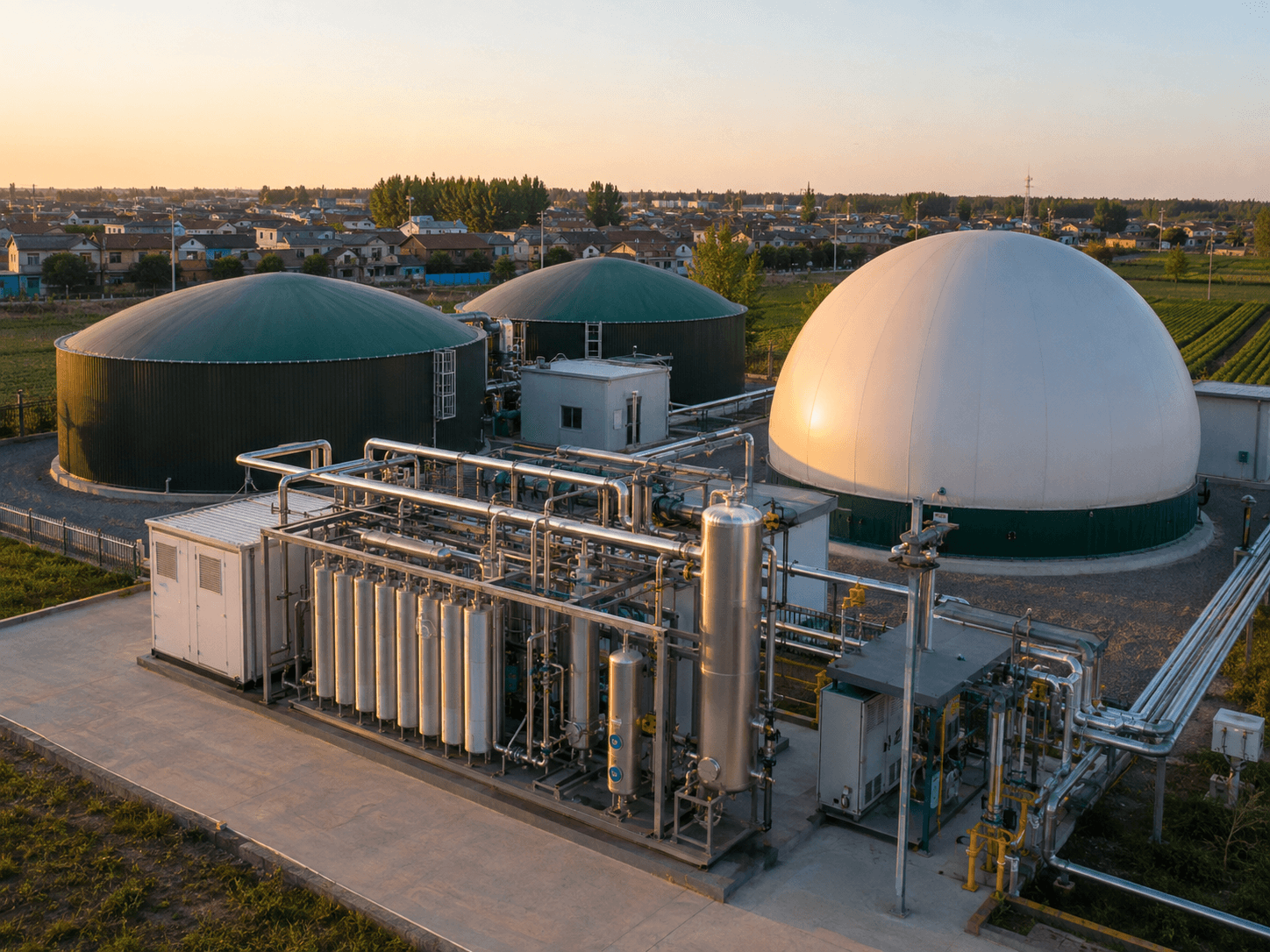
Where is the produced biogas stored? A dedicated biogas holder collects and stores the gas before it enters the biological desulfurization and membrane-upgrading systems. The upgraded biomethane is then supplied steadily to residents in Guyuan County, providing a clean fuel for cooking and heating—all produced from potato-processing waste.
Can Anaerobic Microorganisms Survive at −40°C?
In the high-altitude and extremely cold Bashang region, winter temperatures can fall below −40°C. How can microbial activity be maintained? How can the required digestion temperature be sustained? How can foaming and fluctuations in organic loading be controlled?
The Guyuan project team addressed every one of these challenges.
Their solution combines three essential measures:
- Effective system insulation
- Internal energy supply
- Optimized operating parameters
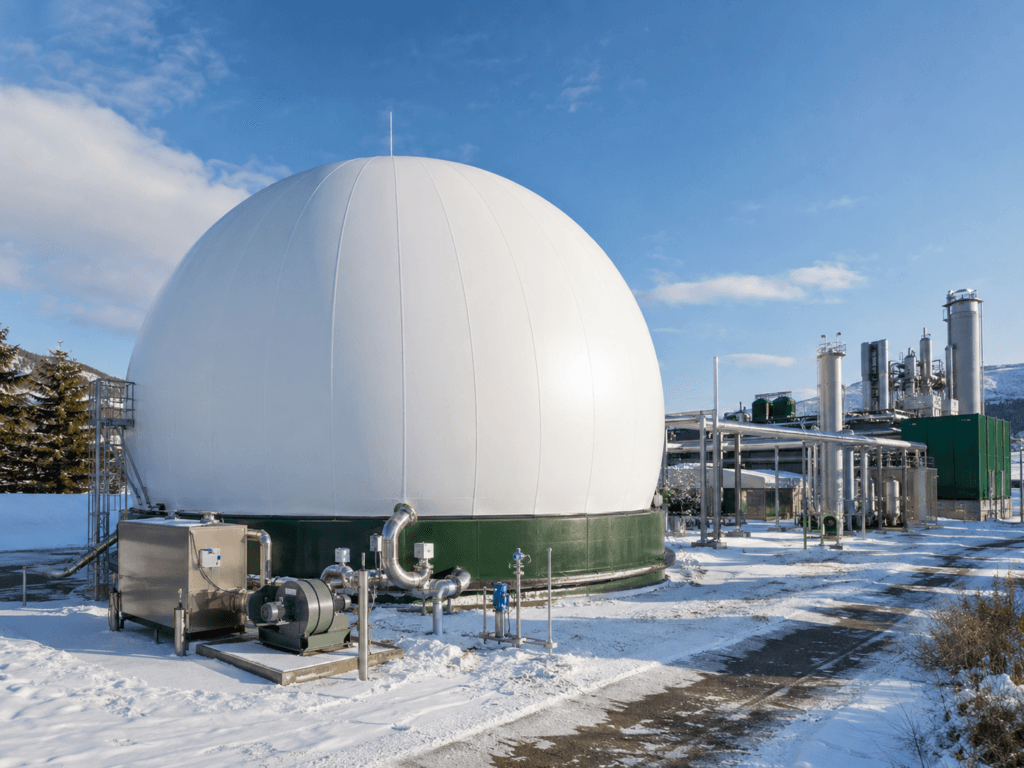
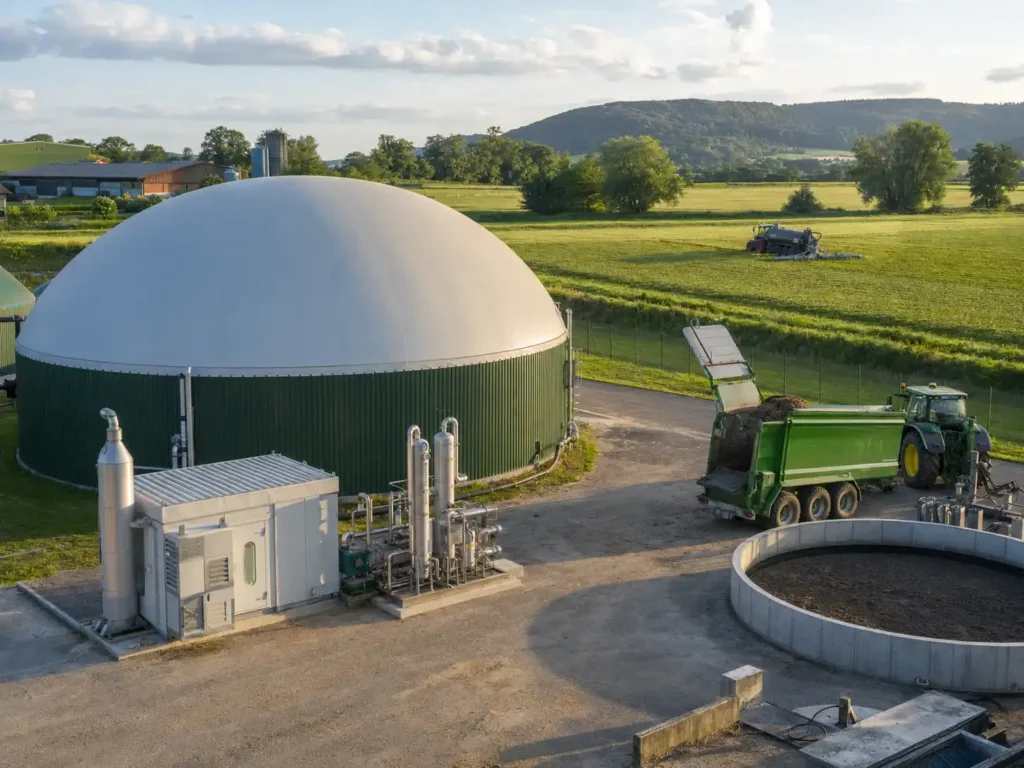
Each anaerobic digester is equipped with a durable biogas cover that helps regulate gas pressure, maintain stable operating conditions, and reduce heat loss. The biogas dome installed on top of the digester combines gas collection and storage functions, ensuring that the produced biogas is safely captured and delivered to the purification system without leakage or unstable pressure.
A portion of the produced biogas is also reused to heat the digestion system. By using its own renewable energy, the facility reduces its dependence on external energy sources.
What is achieved by combining a biogas holder, biogas cover, and biogas dome? Together, they form a complete gas-management system that enables the facility to operate continuously throughout the year, even under extremely harsh climatic conditions.
Extreme cold is not an excuse—it is proof of the system’s reliability. system.
Is Biogas Utilization the End of the Process? What Happens to the Digestate?
After the biogas is upgraded and supplied to local residents, should the remaining digestate simply be discharged?
Guyuan’s answer is clear: return it to farmland.
Rich in organic matter and nutrients, the digestate can be used for farmland irrigation, integrated water-and-fertilizer application, and soil improvement. Biogas provides clean energy, while digestate supports agricultural production. Energy utilization and agricultural recycling can—and should—work together.
What was once considered an environmental burden—potato-processing waste—has now become both a clean-energy resource and a valuable agricultural asset.
From farmland to the processing plant, and then from the processing plant back to farmland, this is how a genuine circular economy operates.
What Are the Key Components of the System?
Biogas Holder — A large-capacity biogas storage system that buffers fluctuations in daily gas production and ensures a stable downstream gas supply. Without reliable storage, how can continuous supply be guaranteed?
Biogas Cover — A sealed covering system for anaerobic digesters that helps regulate gas pressure, reduce heat loss, and maintain stable operating conditions. Without it, how could the system withstand an extremely cold winter?
Biogas Dome — A dome-shaped gas collection structure installed on top of the digester. It safely captures and transfers biogas to the purification system. Without it, how could the gas be collected efficiently?
Biogas Cover: An Essential Safety Barrier
The biogas cover also serves as an important safety barrier. It maintains the anaerobic environment inside the digester, prevents external contamination, reduces uncontrolled emissions, and helps protect the overall system. How could such a critical line of defence be overlooked?
Conclusion
The Chinese Biogas Society has stated that it will continue promoting innovative technologies and representative projects for the high-value utilization of biogas and biomethane. The objective is to accelerate the development of a pathway covering:
Technological breakthroughs → practical validation → industrial application → systematic upgrading
Is the Guyuan potato-processing waste project not a benchmark along this development pathway?
The integration of agricultural processing waste, advanced gas-management infrastructure, and professional technical expertise is turning large-scale clean-energy production into a practical reality.
If you are interested in developing a similar biogas project, please feel free to contact us. Qingdao Haiyue has nearly 20 years of professional experience in double-membrane gas holders and can provide practical technical recommendations and customized solutions based on your project requirements.
.
RELATED BLOG