How Does Anaerobic Digestion Work?
When you see crop residues, livestock manure, food waste, or organic waste from landfills and industrial wastewater, you might only think of “waste”. But biogas engineers see valuable “energy feedstocks”.
Sealed in an oxygen-free environment and broken down by microorganisms, these materials produce a combustible gas – biogas. This natural process is called anaerobic digestion (or the biogas fermentation process).

1. What is Anaerobic Digestion?
Anaerobic digestion is a natural process where microorganisms break down organic waste into biogas without oxygen. It works much like digestion in the human stomach – microorganisms “metabolise” the organic matter we feed them.
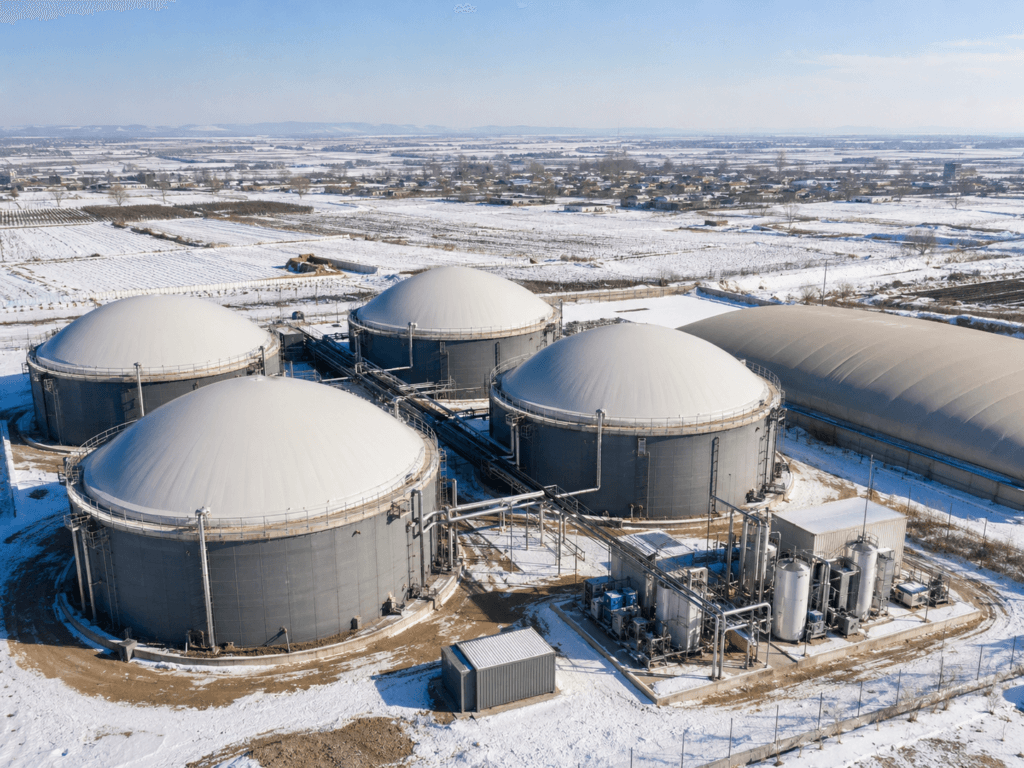
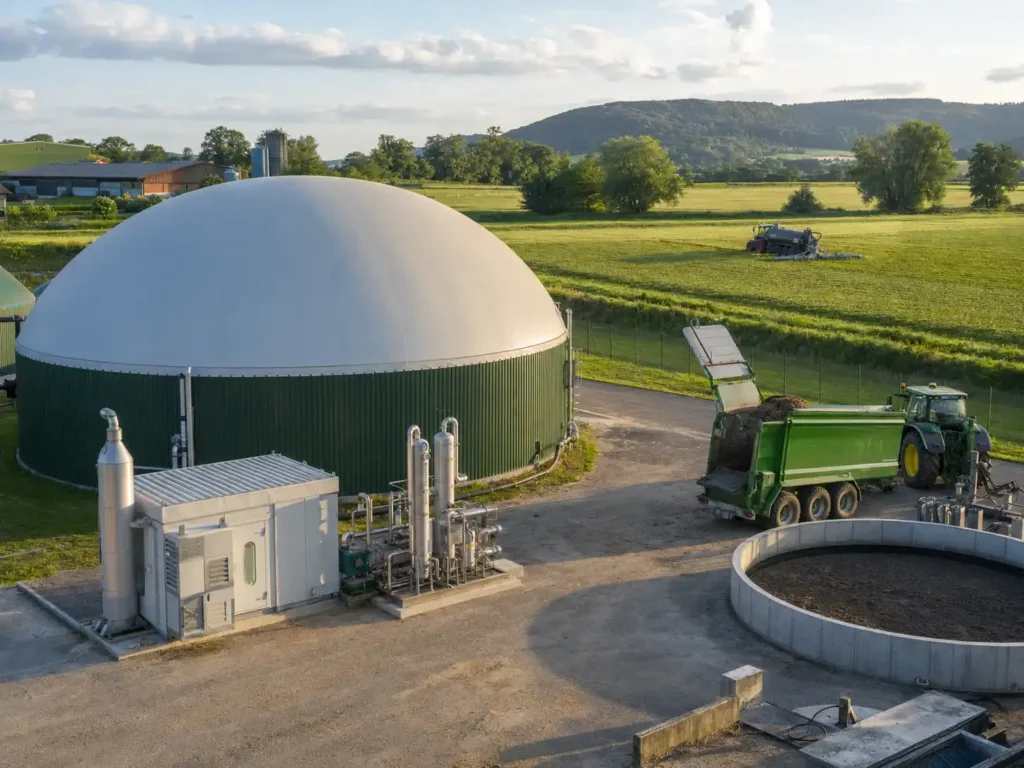
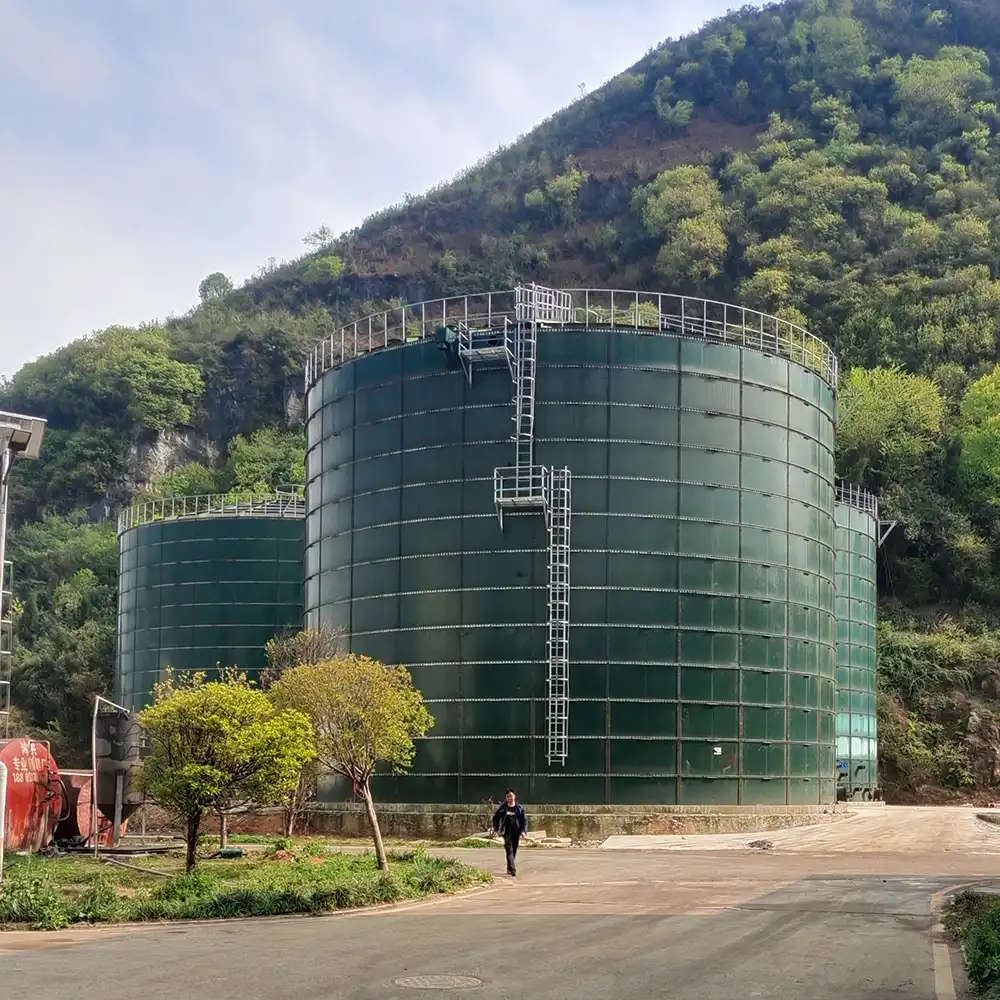
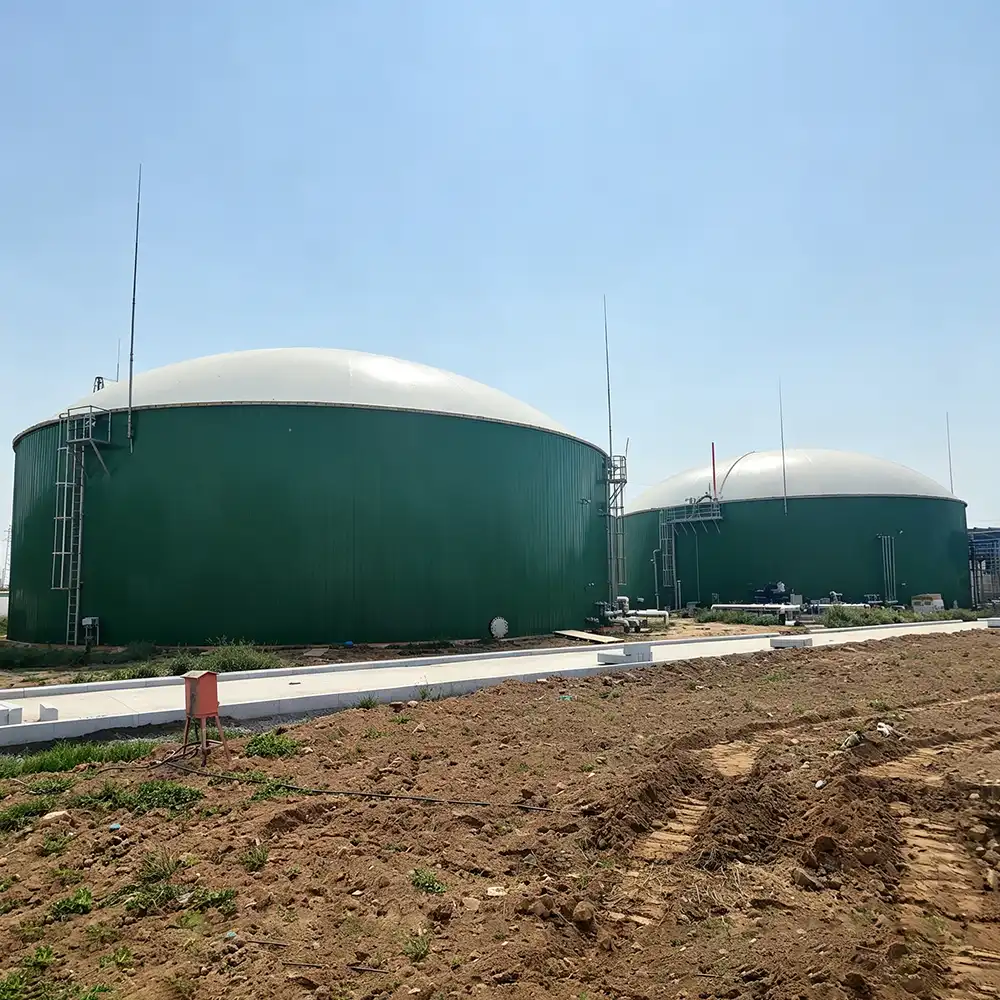
An anaerobic digestion system collects organic waste that would otherwise be dumped, producing odours and greenhouse gases (food scraps, manure, crop residues, sewage sludge). It places this waste into a sealed, oxygen-free reactor – called an anaerobic digester (or biogas digester tank, biogas fermentation tank, or glass-fused-to-steel tank).
Inside this closed tank, a community of microorganisms works like a well-trained biological factory. The core of the process is how these microorganisms work together, each group playing a specific role in breaking down the waste step by step.
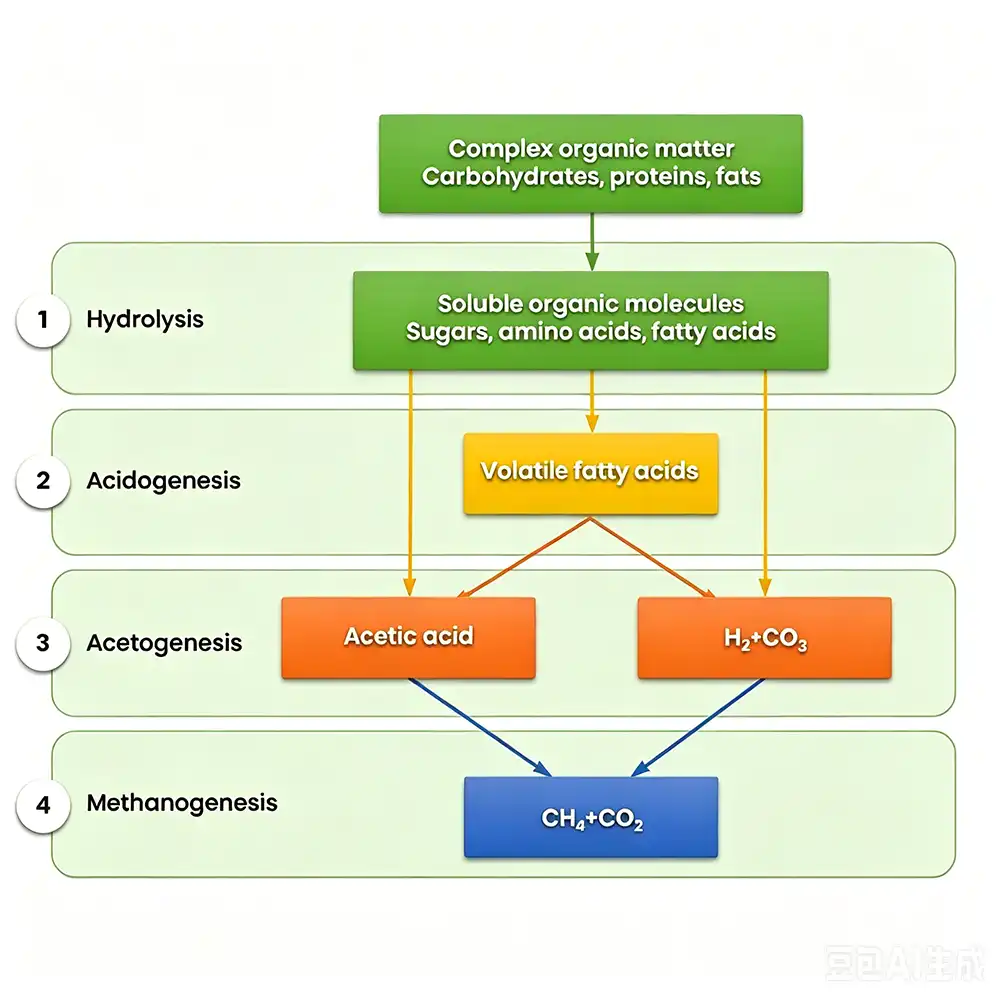
2. The Four Main Steps of Anaerobic Digestion
Anaerobic digestion happens in four stages, each carried out by different groups of microorganisms.
Hydrolysis – Breaking down large molecules: Complex organic materials like cellulose, proteins, and fats are chopped by enzymes into simple sugars, amino acids, and other small molecules. This makes them easier for the next group of microbes to process.
Acidogenesis – Making semi-finished products: The small molecules are fermented by acidogenic bacteria into organic acids, alcohols, hydrogen, and carbon dioxide. This turns the “food” into a form the next stage of microorganisms can use.
Acetogenesis – Refining: The organic acids and alcohols are converted by another group of microorganisms into acetate – the main food methanogens can directly consume – along with a small amount of hydrogen and carbon dioxide.
Methanogenesis – Final output: This is the most critical step. Methanogens (strictly anaerobic bacteria) convert acetate, hydrogen, and carbon dioxide into methane (CH₄) and carbon dioxide (CO₂) – biogas.
Biogas typically contains 50%–75% methane, which gives it its combustible property (source: USDA, EPA, and other industry technical literature). After production, the biogas must be purified (dewatered and desulfurized) before it can be used safely and efficiently.
3. Where Does Biogas Come From and Where Does It Go?
3.1 After Biogas is Produced, a Reliable Storage System is Needed
Anaerobic digestion is a continuous process. As long as feedstocks are fed into the digester, microorganisms constantly produce biogas. But the production rate isn’t steady – it fluctuates with feed rate and temperature changes.
Downstream equipment like generator sets need a stable gas supply. That’s why storage is so important – it acts as a buffer to smooth out peaks and troughs, keeping the whole system running smoothly.
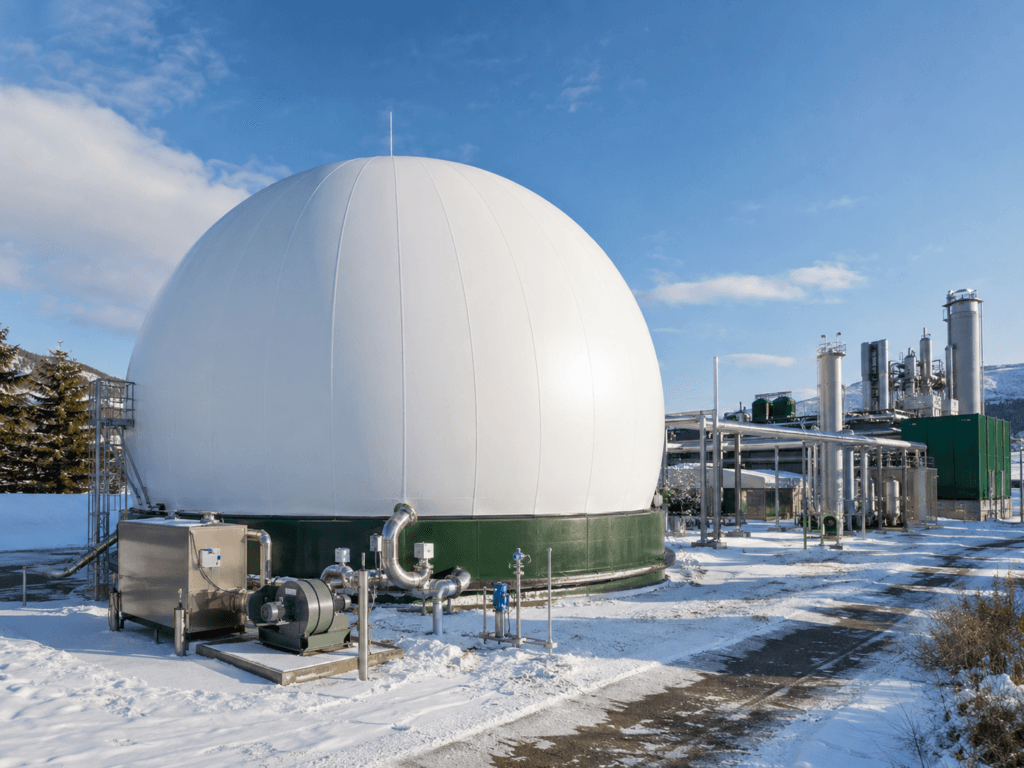
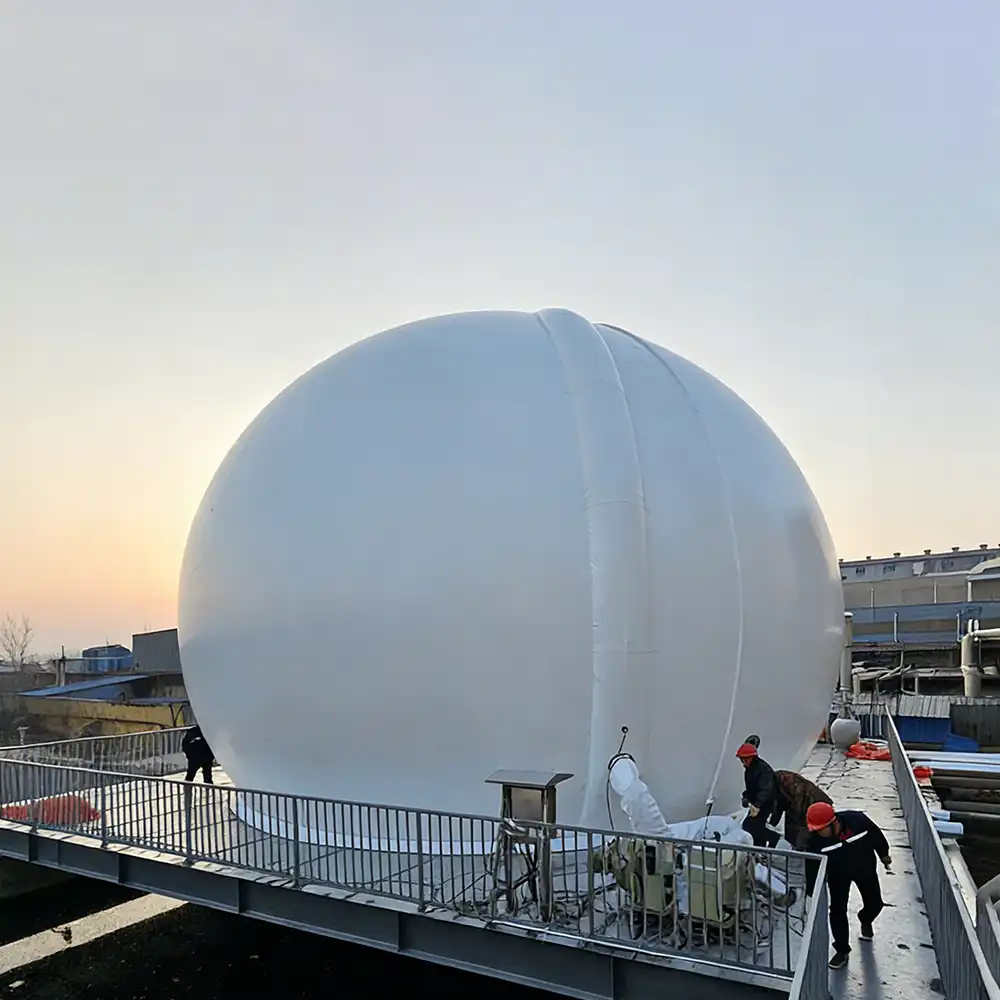
This is where solutions like the Double Membrane Cover from Qingdao Haiyue come into play. Think of it as a smart, flexible balloon sitting on top of the digester. It expands as more gas is produced and contracts as gas is used, ensuring a steady supply.
In the industry, such gas storage devices are also called a biogas dome, biogas storage balloon, or double membrane gas holder. The Double Membrane Cover works with concrete silos, stainless steel silos, and glass-fused-to-steel tanks.
It consists of an inner and outer membrane, both made of biogas-resistant reinforced PVC. The system includes dual support components: a stainless steel central column and a PES belt support structure.
The maximum flexible biogas storage volume is the space between the support belts and the inner membrane when fully raised.
The inner membrane directly stores the biogas, expanding and contracting automatically. The outer membrane is inflated by a blower that injects ambient air between the two membranes, creating an “air cushion” that maintains the shape and constant pressure.
When stored biogas increases, the control system releases cushion air to make room. When it decreases, it injects more air to balance pressure. This design adapts to projects of all scales, from small farms to large commercial power stations.
The membrane is made of high-strength polyester fabric that meets international testing standards (e.g. DIN EN ISO 1421) for tensile strength and tear resistance. Fire performance meets the German DIN 4102 B1 flame-retardant class.
Compared with traditional steel gas holders, the Double Membrane Cover offers significant savings in investment cost and installation time. It needs no anti-corrosion treatment and typically lasts 10 years or more. It’s also UV-resistant, H₂S corrosion-resistant, and microbial-resistant.
If you’re looking for a reliable biogas holder manufacturer, Qingdao Haiyue is a choice you can trust.
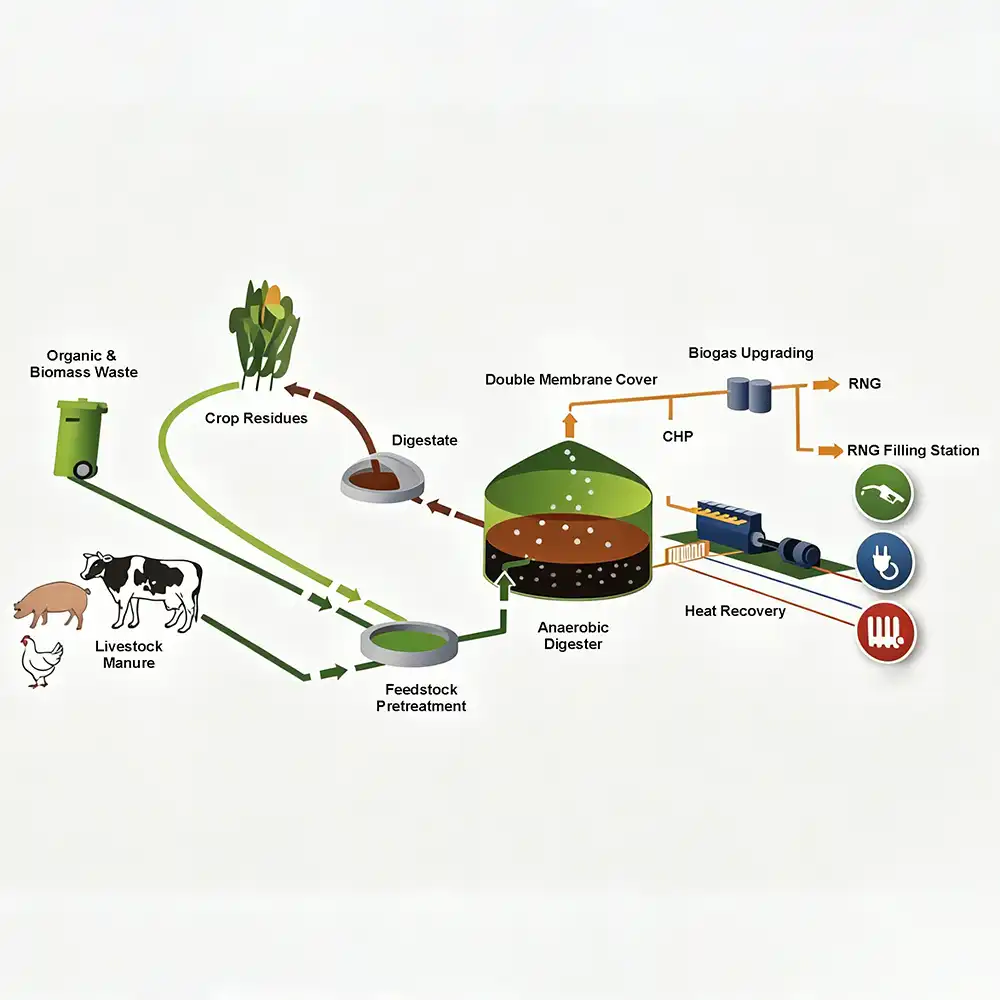
3.2 How Can the Stored Biogas Be Used?
After purification and upgrading, biogas has broad applications. The International Energy Agency (IEA) reports that global biogas and biomethane production is expected to grow by 22% between 2025 and 2030.
Another IEA report points out that only about 5% of the world’s sustainable biogas potential has been developed. That means the industry has huge room for growth.
The main downstream applications include:
(1) Electricity Generation
This is the most common use today. Biogas can generate electricity for a factory’s own needs or be fed into the grid to supply clean power to communities.
Currently, the world’s biogas power generation capacity is enough to supply about 19 million households. And this number is growing fast – global biogas power generation capacity has increased by about 37% over the past five years. Both sets of data clearly show one thing: biogas power generation is growing rapidly worldwide.
(2) Combined Heat and Power (CHP)
Biogas can be burned to produce both electricity and heat. For example, a biogas CHP project operated by the Guangzhou Institute of Energy Conversion, Chinese Academy of Sciences, reached over 80% total system efficiency at full load. The heat can keep the digester warm or supply heating and hot water to nearby buildings.
(3) Upgraded to Biomethane – Injection into Gas Grids or Use as Vehicle Fuel
Biogas can be upgraded to biomethane – it works just like natural gas for cooking, industrial boilers, or as vehicle fuel. And the sustainable biogas production potential worldwide is close to 1 trillion cubic metres per year – that’s equivalent to one quarter of global natural gas demand. In other words, if we made full use of it, one in every four natural gas-powered vehicles could run on biogas instead.
(4) Additional Value – Not Only Biogas, but Also Biofertiliser
Anaerobic digestion also produces digestate or slurry – a natural biofertiliser rich in nitrogen, phosphorus, potassium, and other nutrients. It can replace chemical fertilisers and improve soil quality when returned to the land.
4. Why is the Whole World Paying Attention to Biogas?
Biogas isn’t just an energy source – it addresses several global challenges.
Tackling climate change: If organic waste is left untreated, it decomposes and releases methane – a greenhouse gas far more potent than carbon dioxide. Ton for ton, methane causes about 80 times more warming than CO₂ over a 20-year period.
So when we capture that methane through anaerobic digestion and use it for energy, we achieve two benefits at once: first, we prevent that 80-times-stronger greenhouse effect; second, we reduce our reliance on fossil fuels. A double win.
Enhancing energy security: Developing local biogas industries reduces dependence on imported natural gas and increases energy self-reliance. Countries can produce their own fuel from local waste – energy independence in action.
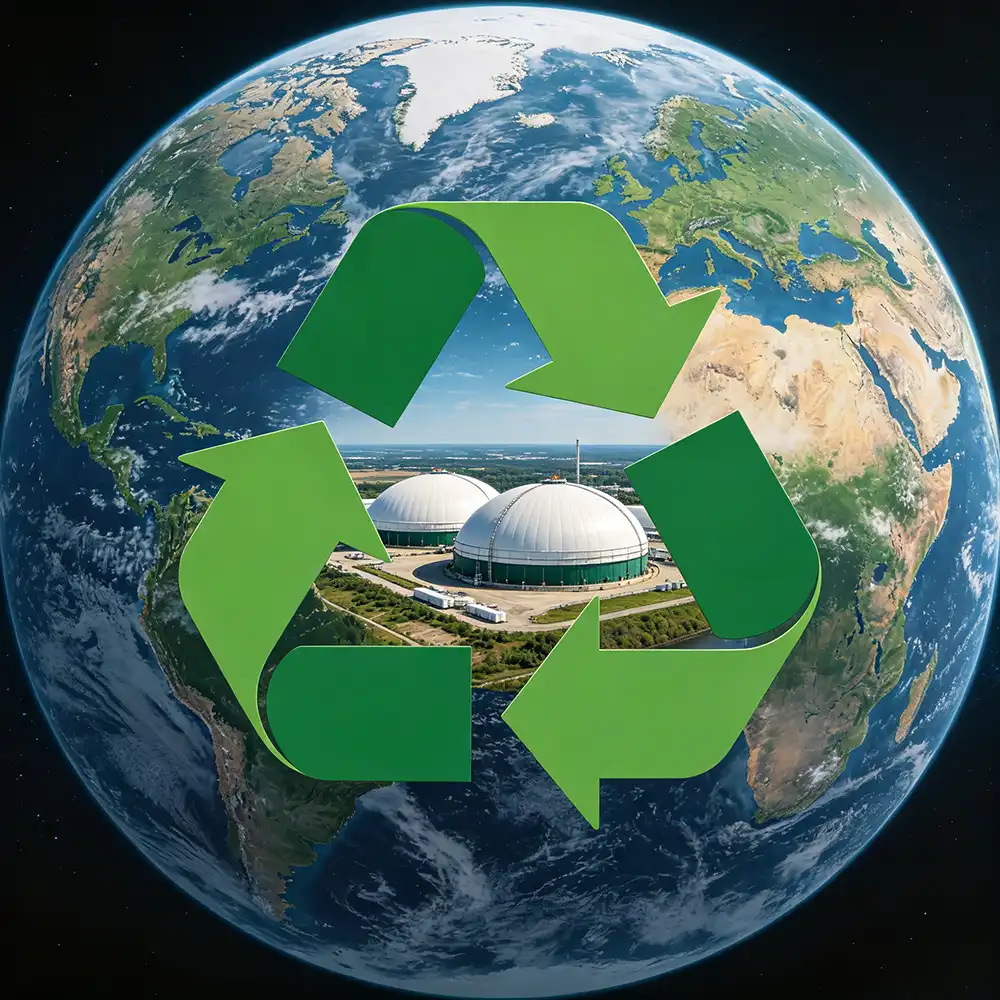
Promoting the circular economy: Anaerobic digestion converts “waste” into “energy” and “fertiliser”, completing a full resource cycle. Waste becomes a resource, not a problem.
5. Qingdao Haiyue’s Role in Biogas Plant Projects
Every step in a biogas plant project – from waste feeding and anaerobic digestion to biogas storage and end-use – needs reliable equipment and technical support.
Qingdao Haiyue, as a professional biogas holder manufacturer, provides safe, durable, and economical gas storage solutions. Whether you’re running a small farm biogas plant or a large commercial power station, we can supply a Double Membrane Cover tailored to your needs.
We help you store every cubic metre of biogas reliably, ensuring a stable supply for power generation, heating, or vehicle fuel. As a China biogas holder manufacturer, we’re committed to delivering high-quality double membrane covers and related technical services worldwide. If you’d like to learn more about product details, technical parameters, or project cases, please contact us. We’ll provide professional technical advice and customised solutions.
RELATED BLOG