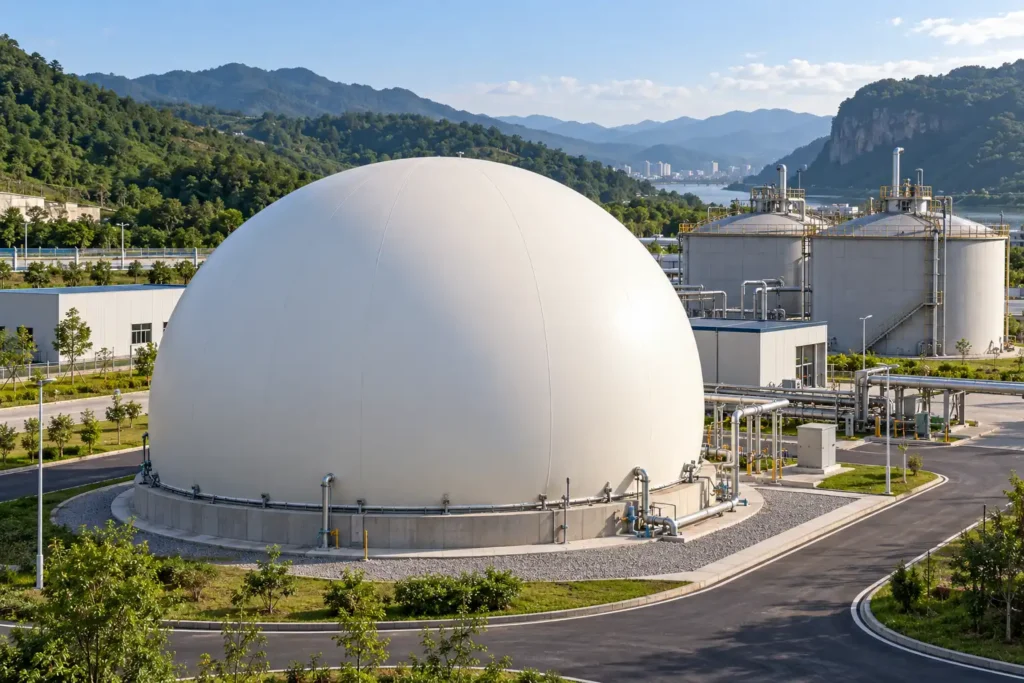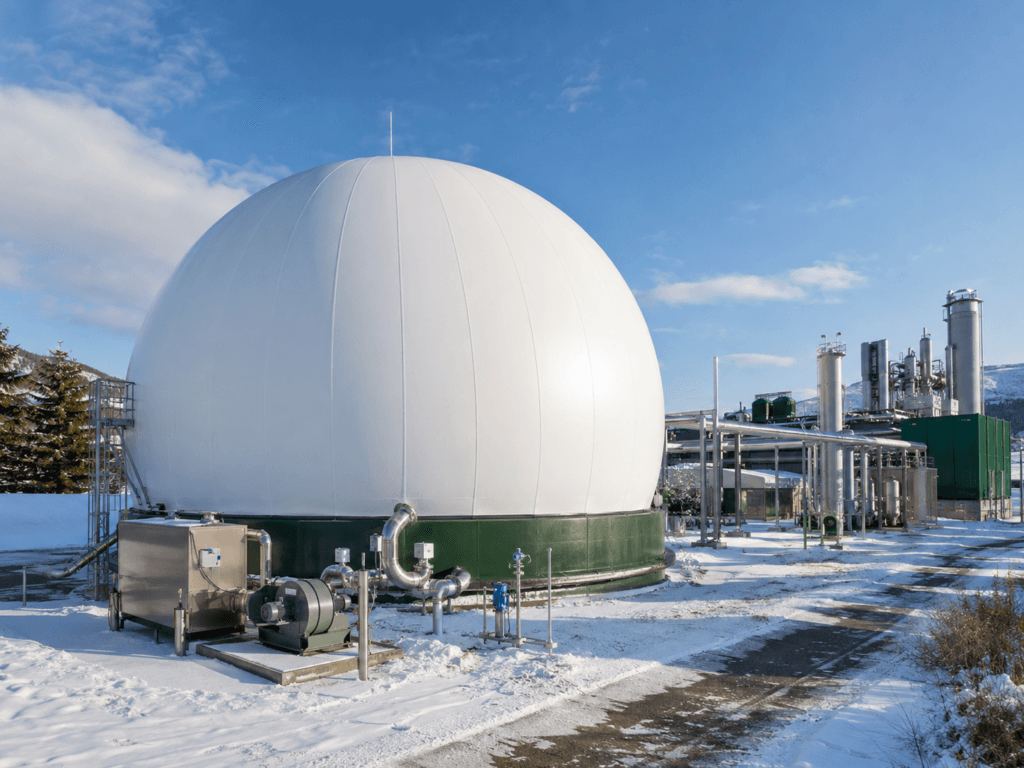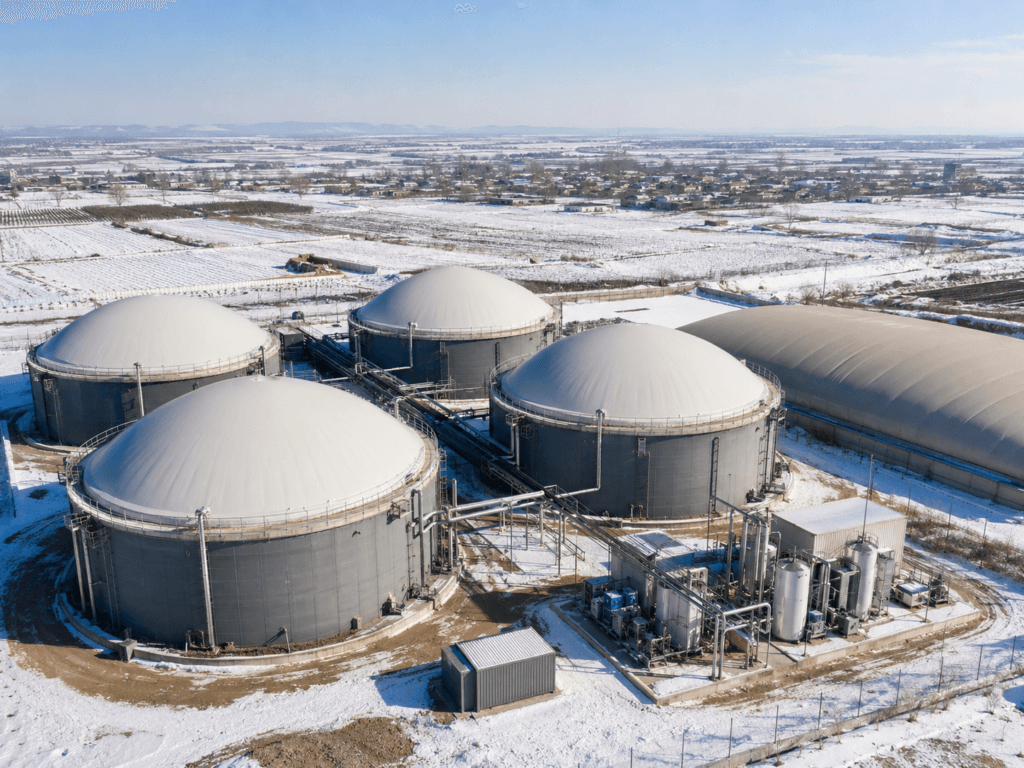
How to Choose a Large Biogas Holder?
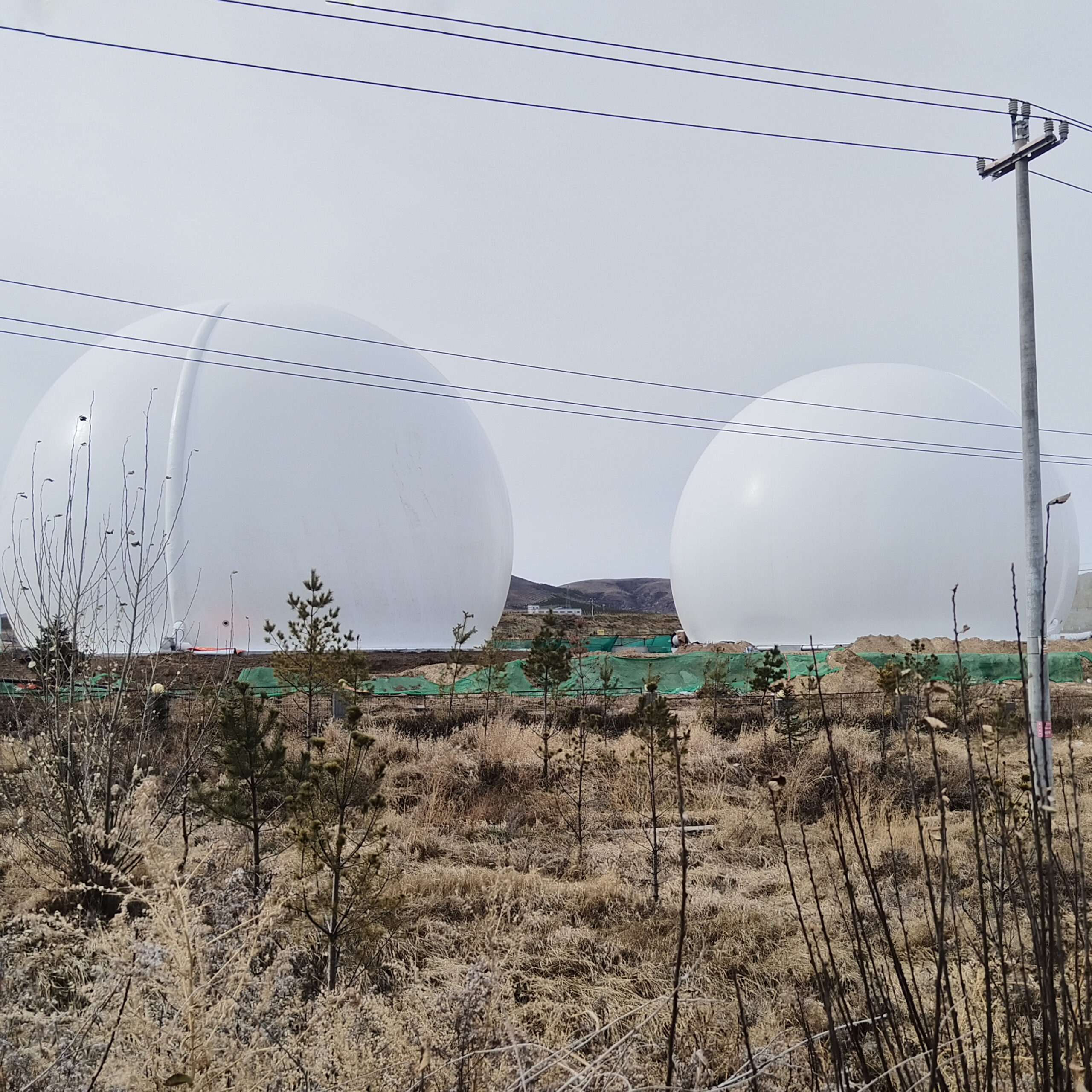
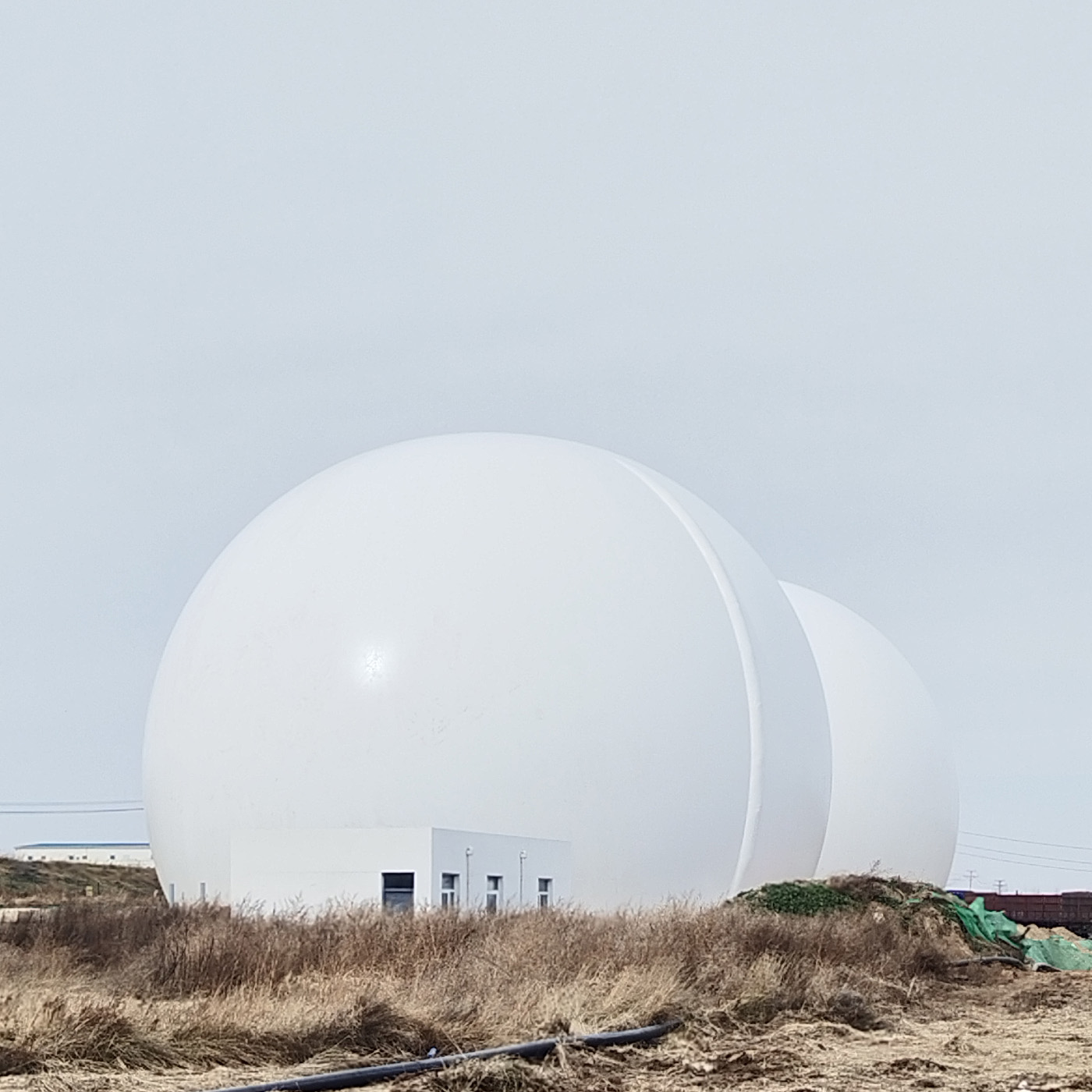
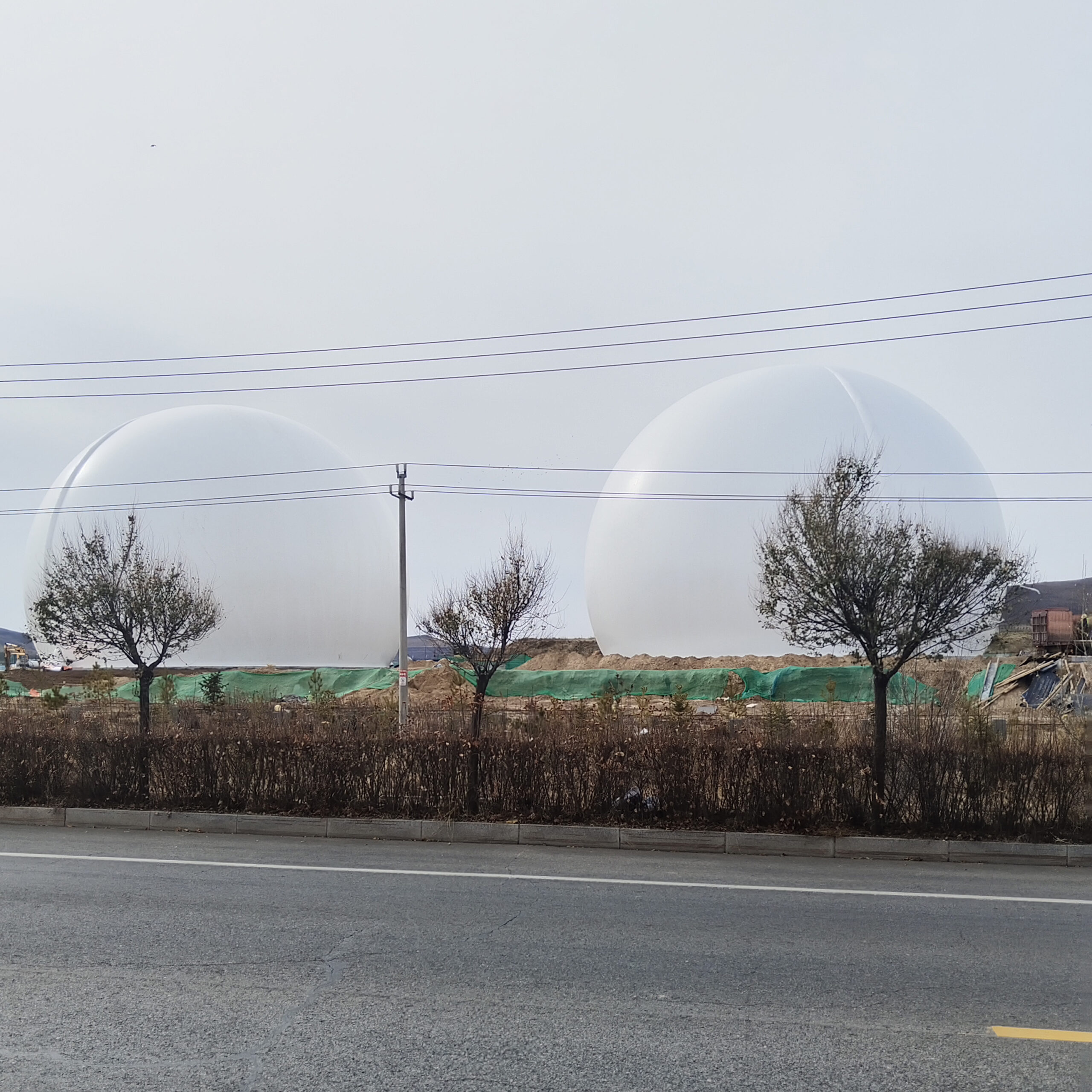
In October 2026, we delivered two 10,000 m³ double membrane gas holders in Zhangjiakou, Hebei. Together, they provide 20,000 m³ of gas storage for a cattle manure biogas plant. January temperatures can fall to −25°C, and the spring winds carry enough sand to ruin a weld seam in a single afternoon.
This article uses that project as an example because some of the engineering and fabrication work behind it is essential to every large gas storage project—and almost all of it is completed before your first conversation with a supplier. Get it wrong, and even excellent workmanship later cannot undo the damage. Get it right, and procurement becomes a fairly uneventful process.
Below 5,000 m³, a gas holder is a component. Above 5,000 m³, it becomes a structure, and the engineering requirements change. The outer membrane needs proper wind load calculations, not guesswork. Anchor bolt positions must be measured on site before the membranes are shipped, rather than after they arrive. The support air blowers must maintain the holder’s shape through gusts, not simply inflate it. Condensate becomes a daily management task rather than an occasional nuisance. Each unit in this project has a diameter of 30 metres, a cylindrical section height of 13 metres, and a dome rise of 4.5 metres. This diameter is also close to the practical upper limit for double membrane structures: beyond approximately 35 metres, steel and concrete gas balloons begin to gain an advantage in cost and wind resistance. That is why large projects often use two or three moderately sized units rather than one giant holder.
The first decisions, then, are about capacity, shape, and operating pressure. Those three answers can eliminate more than half the available options before you even issue a request for quotation.

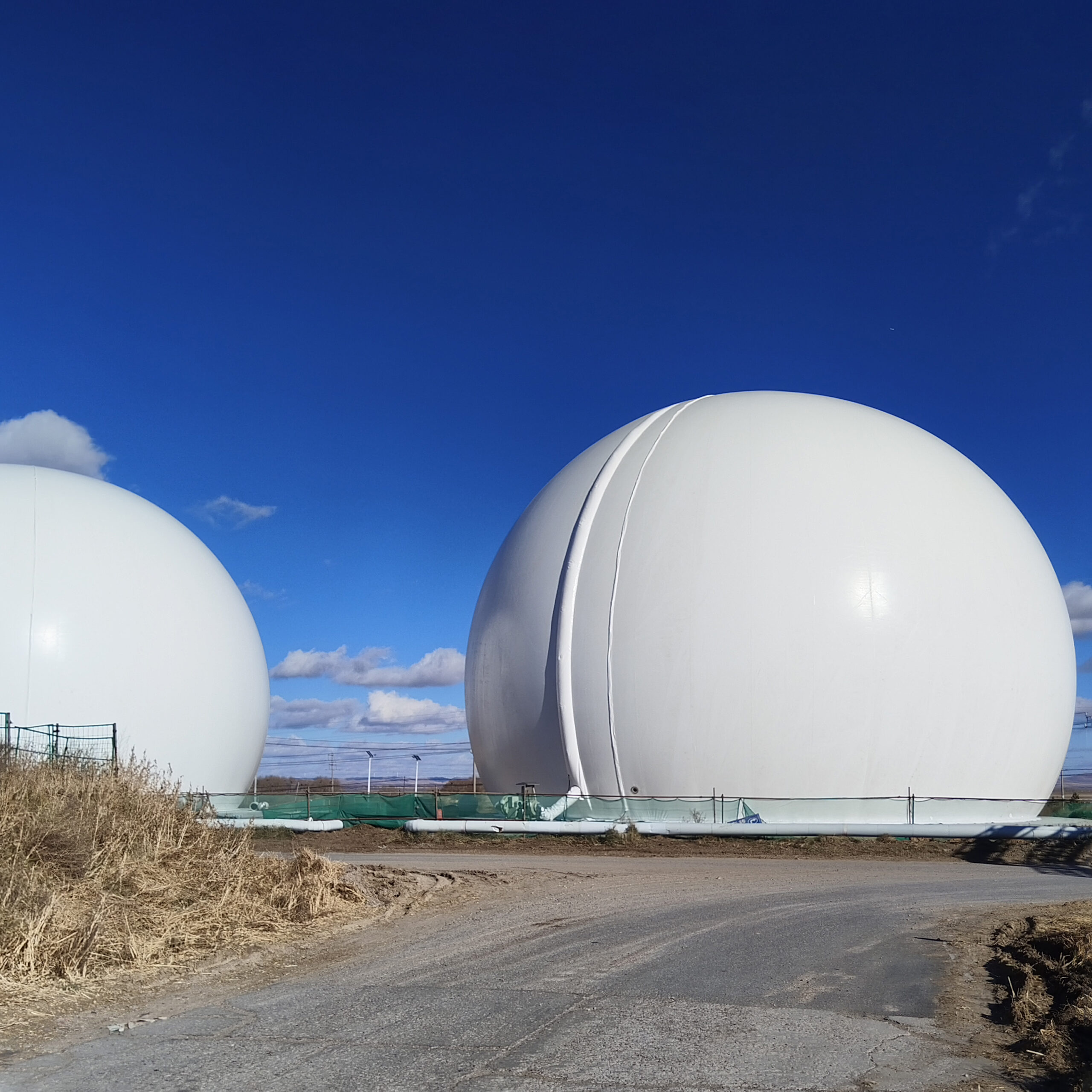
1: Constant volume based on gas usage conditions, not based on gas production volume
Nearly every incorrectly sized gas holder we have been asked to quote was sized according to daily gas production. Daily output only tells you how quickly a holder will fill. It does not tell you how large it should be.
The required storage volume is the time integral of the difference between gas production and gas consumption. At this farm, the figures were as follows: approximately 3,000 cattle, 70 tonnes of fresh manure collected daily, and water added to bring the daily feed volume to 250 m³ for mesophilic anaerobic digestion. Summer biogas production is 6,000–6,500 m³ per day. A 1.2 MW generator set runs for 16 hours daily, shutting down at night when the farm’s electricity demand drops.
Plot the gas consumption profile, and the gap becomes clear: the gas produced during the eight overnight hours has nowhere to go. If the farm had only one digester, 16 hours of gas storage would be sufficient, and one 10,000 m³ holder would do the job.
But the farm has two digesters, and the owner wants production to continue whenever either one is taken out of service for maintenance. That single requirement means adding the longest maintenance window to the calculations above. It is one of the requirements clients most often forget to document—and frequently the real reason the final storage capacity exceeds the initial calculation. Allowing for a 16-hour overnight gap, a weekend, a winter margin, and a maintenance window brings the required storage period to approximately three days. At 6,000 m³ per day, that means 18,000 m³, rounded up to 20,000 m³.
There is also an upper limit that someone selling storage capacity may never mention: oversized storage creates problems of its own. If gas sits in the holder for two weeks, it has time to form condensate, while sulfur compounds in the gas have time to gradually attack the inner membrane. A holder whose contents rarely turn over will require more frequent inspections and earlier membrane replacement. If your calculation calls for more than five days of storage, pause and ask: do you really need that capacity, or would a flare and a smaller buffer holder better meet your needs?
This is where projects in northern climates run into trouble—and checking it is one of the most useful things you can do before requesting a quotation.
Biogas production is not constant throughout the year. For mesophilic anaerobic digestion at this latitude, winter gas output is typically 15–30% lower than in summer: more of the plant’s own gas is consumed to maintain digester temperature, and cold feedstock hydrolyses more slowly. This project’s design figures were 6,000–6,500 m³ per day in summer and 4,500–4,800 m³ per day in January. A holder sized using summer figures can prove insufficient precisely when it is needed most—in mid-January, when the generator is running at full load and grid demand is at its highest.
We included both figures in the design basis and explained to the owner which condition governed the storage capacity. A supplier who does not ask this question is quoting a tank, rather than engineering a system.
2: Use Outlet Pressure to Narrow Down the Gas Holder Type
This decision eliminates more options than any other, yet people often approach it in reverse: they choose the holder type first, only to discover that the pressure is unsuitable.
Flexible double membrane gas holders typically operate at approximately 0.2–1.5 kPa. That is enough to deliver gas through a short pipeline to a burner, boiler, or generator set with modest inlet pressure requirements. It is insufficient for applications requiring substantially higher pressure. Start with the downstream equipment.
If the boiler or generator is nearby and accepts low-pressure gas, a double membrane holder is the default choice: it offers the lowest capital cost, with no moving parts in the gas path and no corrosion issues. If the generator requires higher inlet pressure, or the gas pipeline is long, you will need a booster air blower or compressor anyway. In that case, choose the holder type based on footprint and maintenance requirements. If biogas upgrading to biomethane is planned, the upgrading unit needs a steady flow and its specified inlet pressure. Installing a double membrane holder upstream of the compressor is appropriate—and can be particularly beneficial because it helps the upgrading unit operate steadily. The compressor supplies the pressure; the holder provides the buffer. If the required holder outlet pressure exceeds approximately 5 kPa, you are entering the territory of steel dry-seal or concrete gas holders, where the cost comparison changes completely.
The generator sets at this project accept low-pressure gas, and the upgrading unit planned for Phase II will have its own compressor. A double membrane holder was therefore the right choice: we avoided paying for pressure capability that the compressor would already provide.
3: Translate Storage Volume into Dimensions, Then Check the Site
Once the storage volume is established, the geometry follows. Site conditions then determine whether that geometry can be built.
The practical height-to-diameter ratio for double membrane gas holders is approximately 0.4–0.5. For this project, that meant a diameter of 30 metres and a cylindrical section height of 13 metres. With a five-metre maintenance clearance around each unit, each holder requires approximately 1,250 m² of unobstructed space. Vehicle access for membrane replacement must also be provided—the membranes require lifting equipment to handle.
Then check the following, in this order: design wind pressure and terrain roughness—a 30-metre membrane acts like a sail, and wind usually governs the anchorage design; dome snow load and the risk of snow accumulation; seismic design requirements; frost depth, because the anchoring ring beam must be founded below the frost line; and drainage, because a holder standing in accumulated water will inevitably develop corrosion problems at its base.
The site’s design wind pressure was 0.55 kN/m², and its design snow load was 0.3 kN/m². The resulting design used 48 anchoring points, compared with the 36 commonly used for sheltered inland projects. The frost depth was 1.8 metres. On cattle farm projects, this requirement is particularly vulnerable to being “optimized” out because cutting it produces no immediately visible consequences. Frost heave gradually lifts the ring beam by a few centimetres, and the membrane finally tears at its base after three winters. By then, the entire membrane skirt around the perimeter needs replacing.
4: Select Membrane Materials for the Climate and Gas Composition, Not the Price per Square Metre
Two questions determine the membrane specification. Neither is “Which supplier offers the lowest price per square metre?”
The first is exposure to UV radiation and wind. A PVC-coated polyester outer membrane is an economical choice, lasting approximately six to ten years at sheltered sites in temperate climates. PVDF costs 15–25% more but offers roughly twice the service life at sites exposed to strong UV radiation and high winds. High-altitude conditions combined with sand-laden spring winds are exactly where PVDF can pay for itself before the first membrane replacement. For this project, we therefore selected an outer membrane of 1,100 g/m² PVDF-coated polyester and an inner membrane of 900 g/m² PVC-coated polyester.
The second is gas composition, particularly hydrogen sulfide. At this farm, the H₂S concentration before desulfurization is 1,500–3,000 ppm. The inner membrane is a gas-tight barrier, not a corrosion-protection layer. At these concentrations, if upstream desulfurization fails to function properly, no membrane grade can save the situation. We put that statement in writing. Our specification required plasticizer retention performance suited to the operating conditions, along with a written statement from the supplier defining what the inner membrane can—and cannot—withstand. This became a contract appendix, because without clear limits, membrane ageing two years later becomes a dispute over responsibility.
Two further details distinguish a sound specification from a cheap one. First, the bottom membrane: many quotations quietly exclude it, leaving the gas in direct contact with the concrete slab. Second, weld strength must be verified through peel testing of specimens cut from actual production seams, rather than from a retained sample roll.
RELATED BLOG