Why Has the Double Membrane Gas Holder Become the Standard Choice for Biogas Storage?
Gas storage is the critical link that enables a biogas project to move from simply producing gas to using it efficiently. Biogas production is rarely constant, while downstream demand often fluctuates. So how can intermittently produced biogas be stored safely and supplied steadily?
With its combined advantages of flexible storage, constant-pressure output, operational safety, and cost efficiency, the double membrane gas holder has become one of the most widely used gas storage systems in biogas, biomethane, and industrial anaerobic digestion projects. This article introduces its operating principle, core features, suitable applications, and a representative project, providing a practical reference for selecting biogas storage equipment.

What Is a Double Membrane Gas Domes?
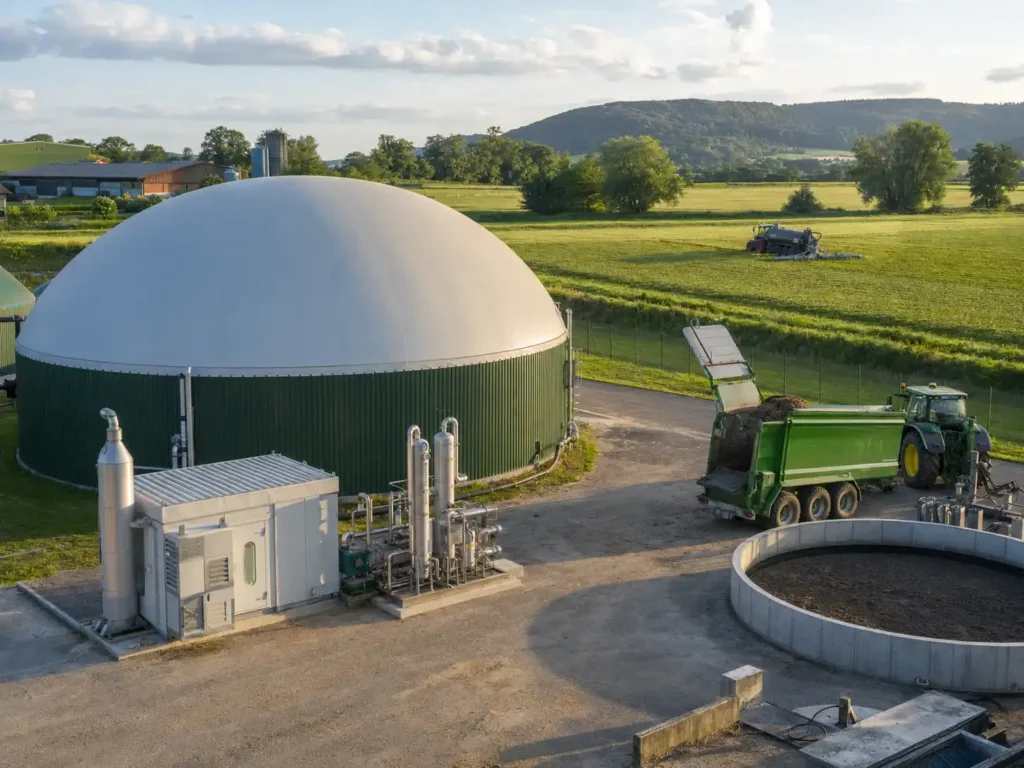
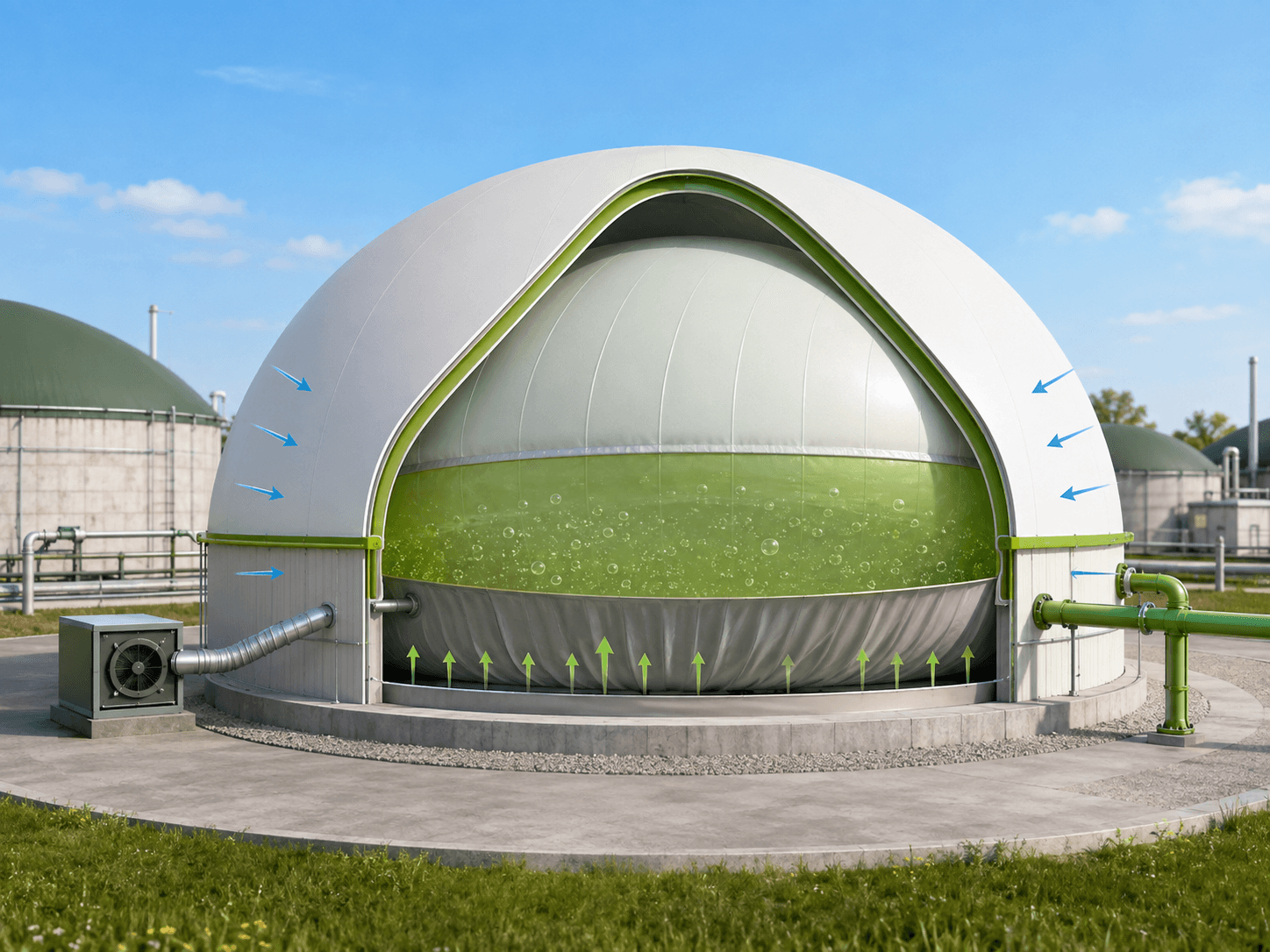
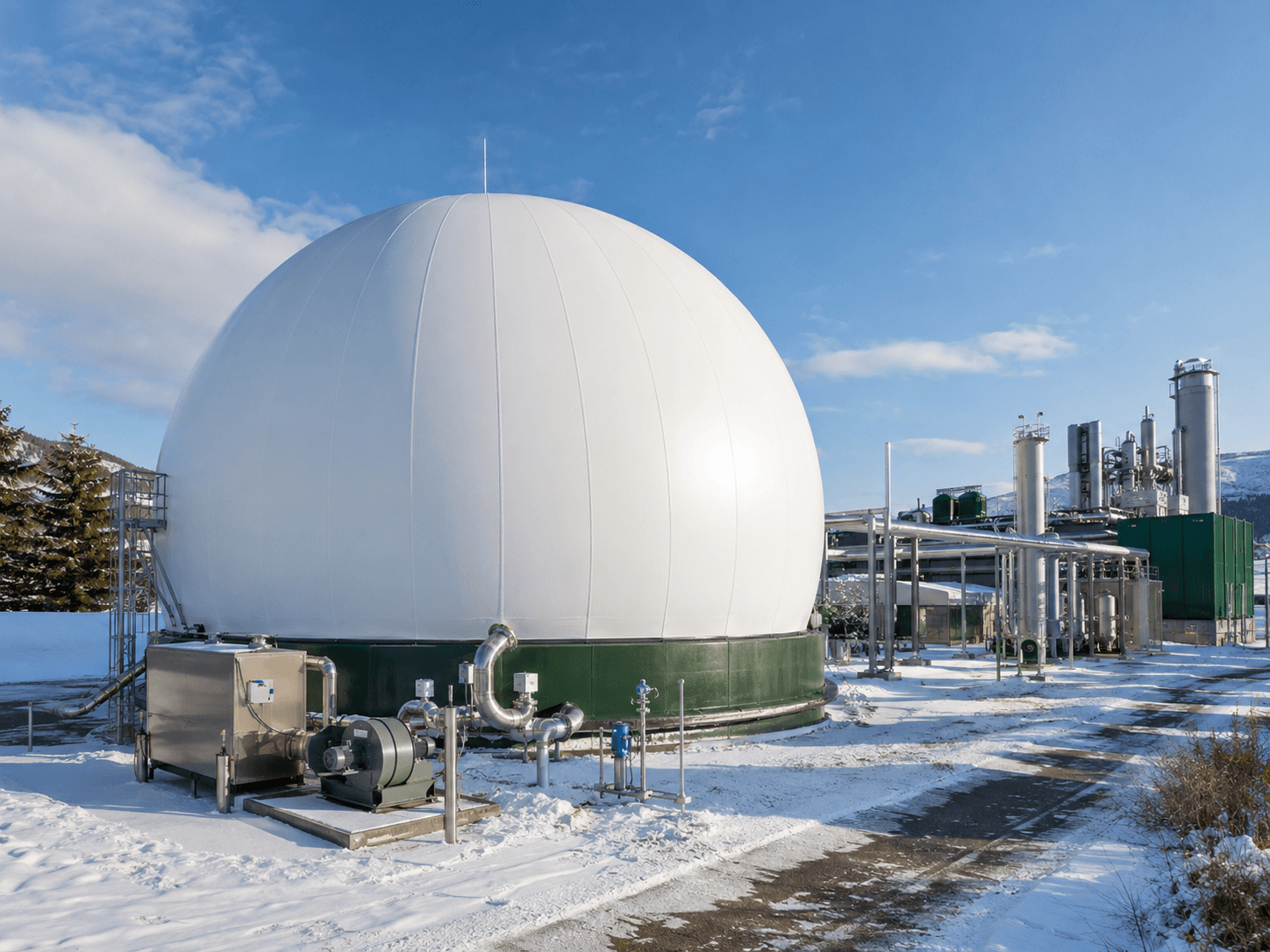
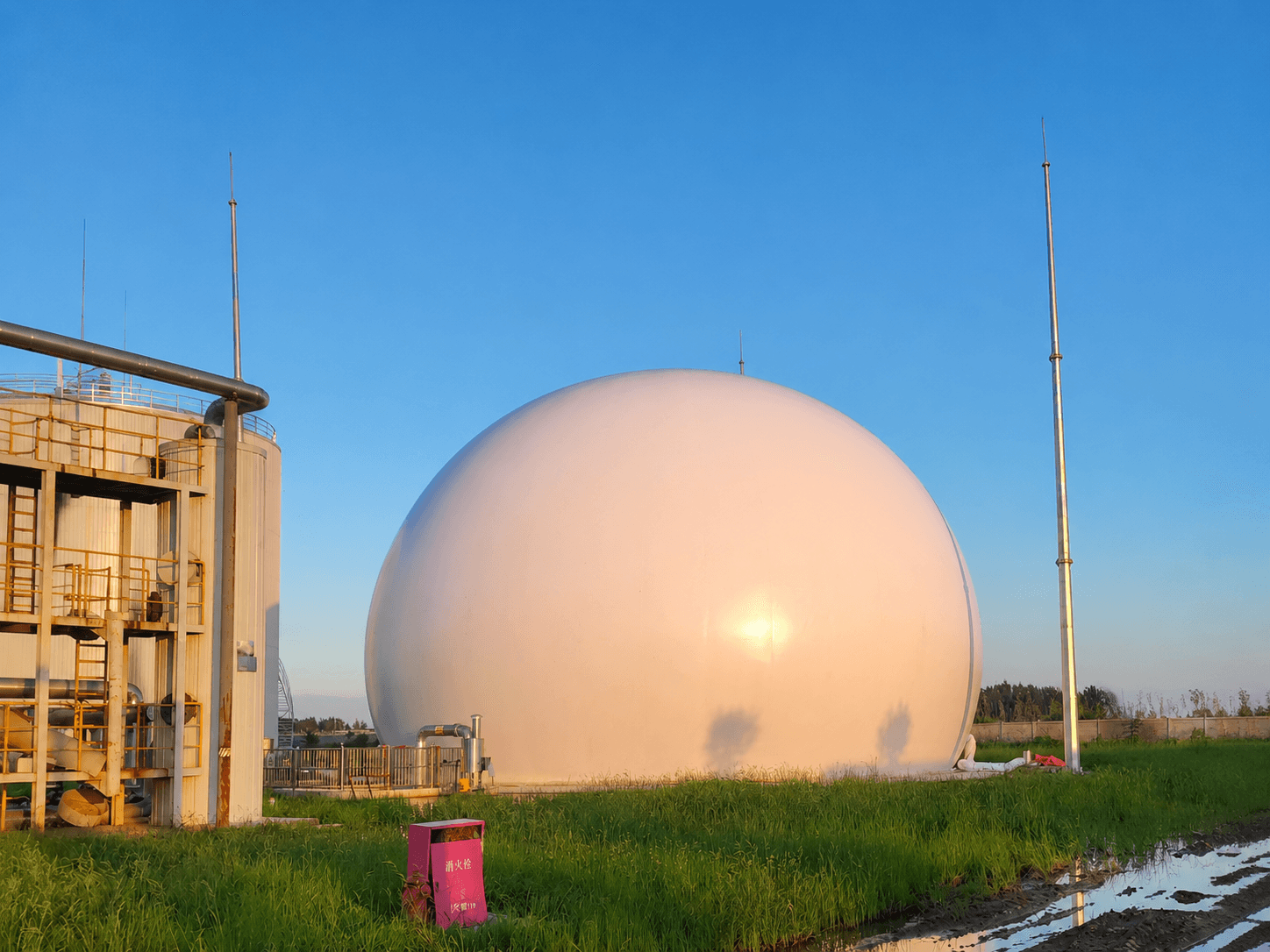
A double membrane gas holder is a flexible gas storage system consisting of an outer membrane, an inner membrane, and a bottom membrane.
The enclosed space between the inner membrane and the bottom membrane is used to store biogas. The outer membrane serves as a protective structure and is continuously pressurized by support air supplied by a blower, allowing the gas holder to maintain its stable, fully inflated shape. The inner membrane rises and falls according to the amount of stored biogas, expanding when the gas volume increases and contracting when the volume decreases.
Compared with traditional wet gas holders and rigid high-pressure storage tanks, double membrane gas holders require neither a water-seal structure nor heavy steel construction. The biogas pressure inside the holder remains stable and controllable, while the flexible inner membrane automatically adjusts to changes in gas volume.
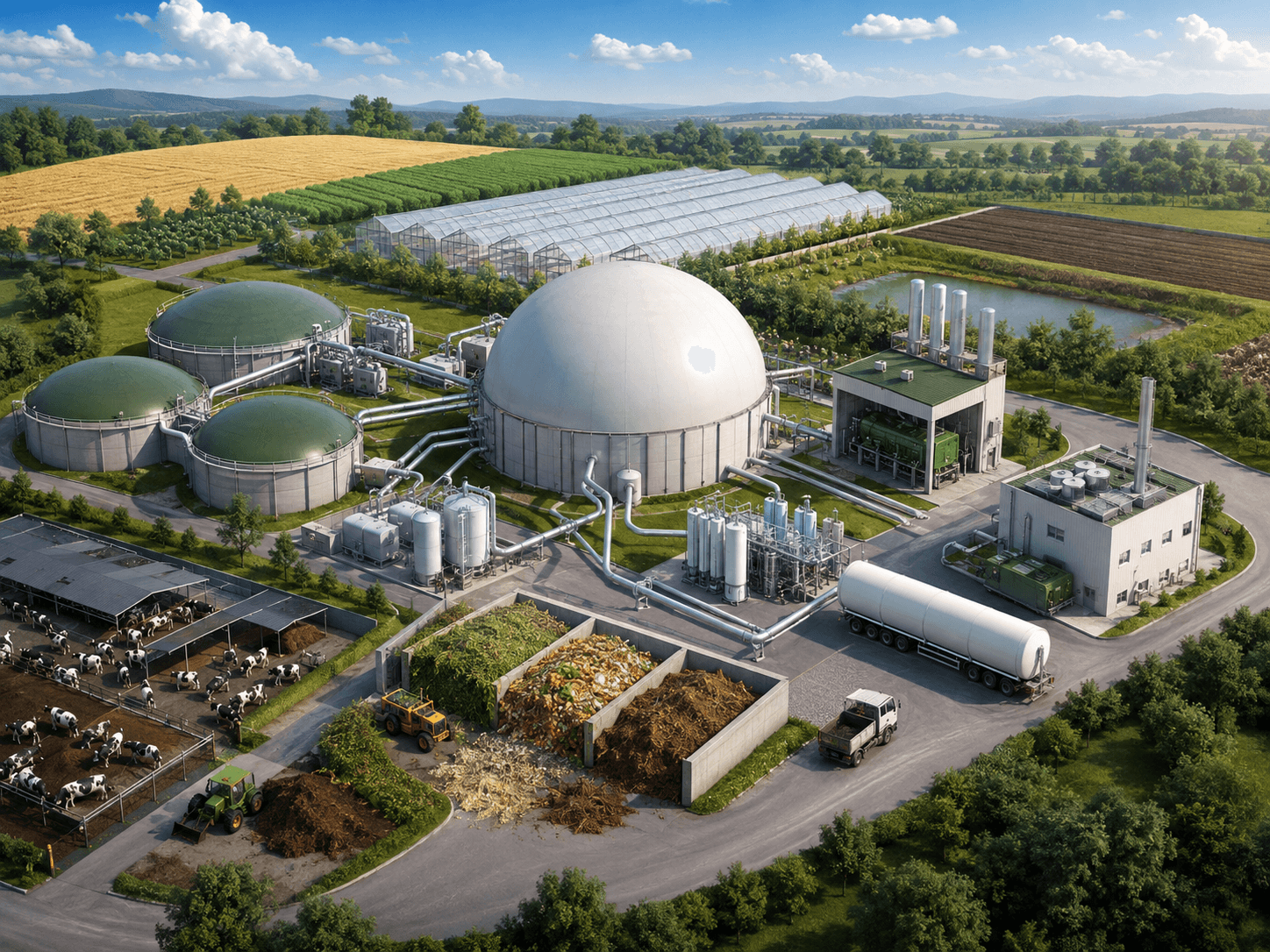
The gas holder can also be directly connected to downstream systems such as biomethane upgrading units, combined heat and power plants, and industrial boilers, creating a complete process chain of:
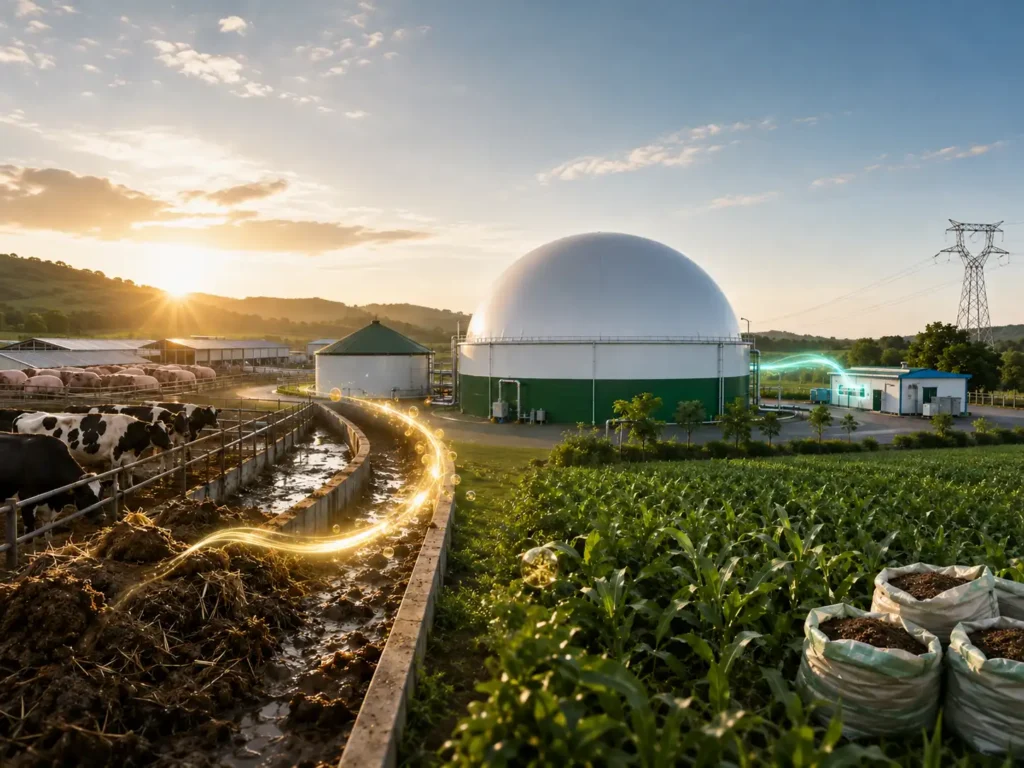
Anaerobic Digestion – Flexible Gas Storage – High-Value Energy Utilization
Core Product Features
Constant-Pressure Output for Stable Gas Supply
The outer membrane is continuously inflated by a support-air blower and equipped with a pressure-regulating valve, ensuring that the biogas pressure inside the gas holder remains within a stable range regardless of changes in the stored gas volume.
The flexible gas chamber effectively balances the difference between peak biogas production and low gas demand. It provides a stable gas supply to downstream equipment such as CHP units and biomethane upgrading systems, helping to reduce frequent start-stop cycles and fluctuations in operating load.
Safe, Corrosion-Resistant, and Suitable for Harsh Environments
The membranes are manufactured from high-strength coated fabrics with excellent resistance to ultraviolet radiation, low temperatures, and corrosive biogas components, including hydrogen sulfide.
The gas holder can also be equipped with gas leakage detection, overpressure protection, explosion-proof blowers, and other safety devices.
Because the system uses a flexible structure without extensive steelwork or a conventional water seal, it is less vulnerable to freezing during winter and generally requires no additional heat tracing or insulation. This makes it suitable for year-round operation, even in cold northern regions.
Cost-Effective, Efficient, and Easy to Maintain
Double membrane gas holders are lightweight and place relatively low demands on the foundation. Their installation can usually be completed within several weeks.
Compared with wet gas holders of the same capacity, they can significantly shorten the construction period while reducing civil engineering and structural steel costs.
During daily operation, only the outer membrane support blower needs to remain in service, accompanied by regular membrane and equipment inspections. There is no need for water replenishment, water-seal maintenance, or complicated winter freeze-protection measures. As a result, double membrane gas holders offer clear advantages in terms of total lifecycle cost. we can determine how much biogas is stored inside.
Application Scenarios
Double membrane gas holders can be customized in capacities ranging from several hundred cubic metres to more than 10,000 cubic metres. Typical applications include:
Circular agriculture and agricultural-waste recycling projects that require production to be coordinated with actual gas demand and fluctuations to be balanced.
Temporary biogas storage and gas-flow buffering in large-scale biogas and biomethane projects;
Gas-flow regulation in anaerobic digestion projects treating crop straw, livestock manure, food waste, sewage sludge, and other organic feedstocks;
Combined heat and power generation, biomethane upgrading, industrial boiler supply, and centralized residential gas supply where stable gas pressure is required;
Typical Application
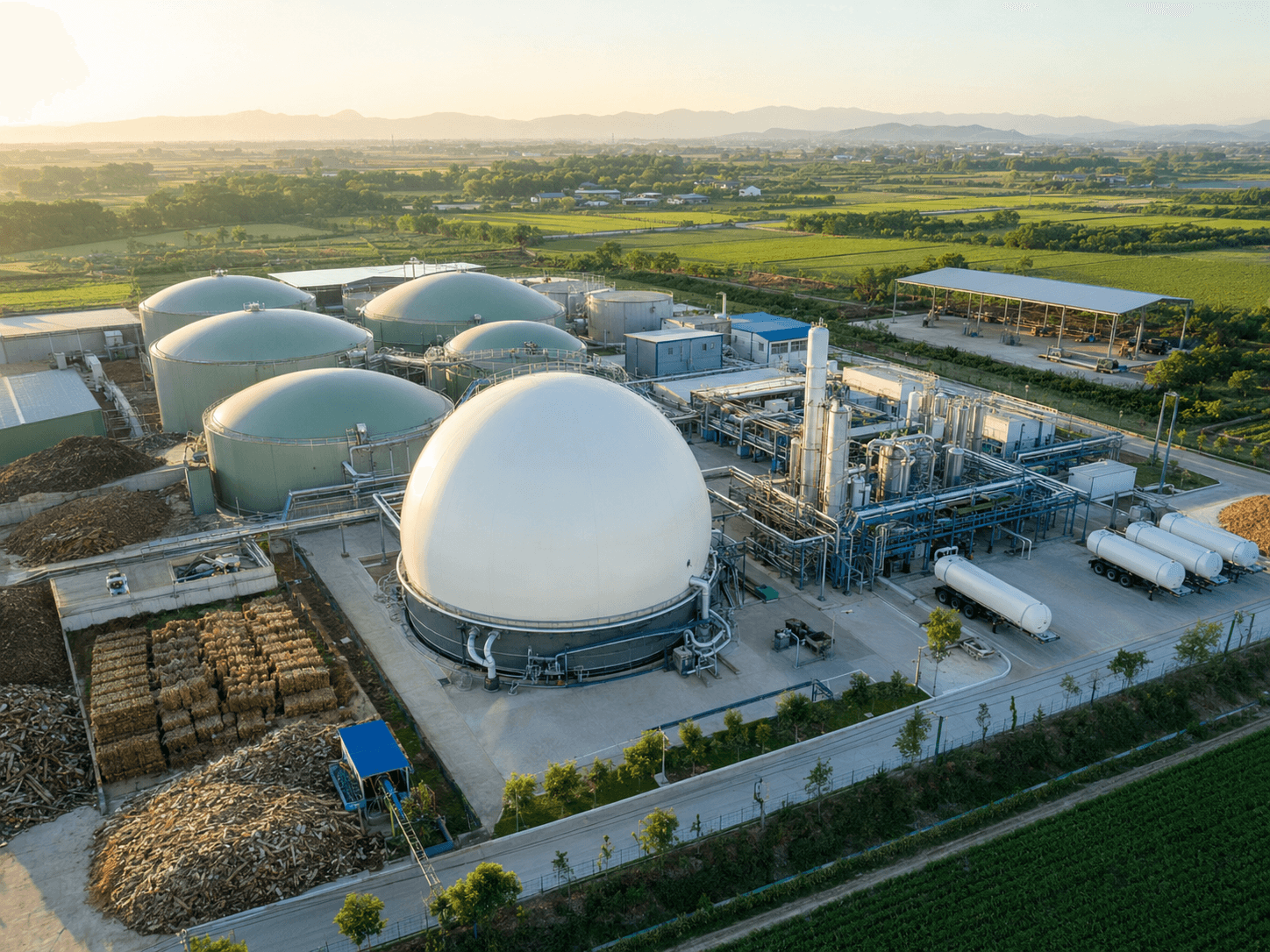
In large-scale biomethane projects using mixed feedstocks such as crop straw, livestock manure, and fruit and vegetable residues, the upstream process may employ continuous, high-temperature, high-loading, multi-stage anaerobic digestion to achieve efficient biogas production.
The double membrane gas holder installed downstream plays a critical role in balancing gas volume and maintaining constant-pressure supply.
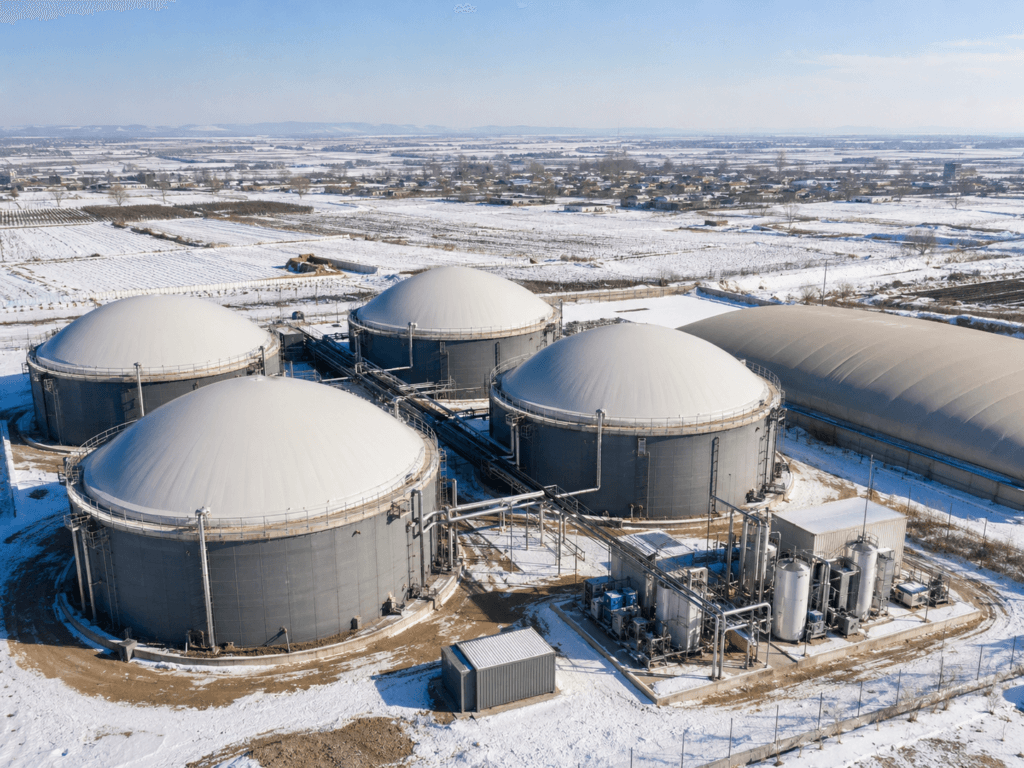
One large-scale biomethane project in Hubei Province, China, processes more than 50,000 tonnes of organic waste annually and produces approximately five million cubic metres of biomethane per year after biogas upgrading.
Because the biogas output from the upstream multi-stage anaerobic digestion system fluctuates according to the feedstock loading rate, a double membrane gas holder was installed upstream of the upgrading unit to regulate the gas flow.
During periods of peak biogas production, surplus gas is temporarily stored inside the flexible gas chamber. When gas demand or the operating load of the upgrading system increases, the gas holder releases the stored biogas at a stable pressure to supplement the gas supply.
Operational results have demonstrated that the double membrane gas holder effectively balances fluctuations between biogas production and consumption, ensuring the continuous and stable operation of the upgrading system. It has therefore become an indispensable part of the complete value chain:
Feedstock – Anaerobic Digestion – Gas Storage – High-Value Utilizationeight changes into a standard 4–20 mA signal.
Conclusion
Between biogas production and effective gas utilization lies one essential step: gas storage.
The double membrane gas holder uses flexible storage to balance fluctuations between production and demand, constant-pressure output to support stable downstream operation, and a lightweight structure to reduce construction and maintenance requirements.
An increasing number of biogas and biomethane projects have demonstrated a simple principle: when the gas storage system is selected correctly, the entire project can operate more smoothly and efficiently.
As high-value biogas utilization continues to expand, double membrane gas holders will develop toward larger storage capacities, more intelligent monitoring, and increasingly standardized safety systems, providing reliable equipment support for the high-quality development of the global biogas industry.bility, and reliability of the entire biogas system.
RELATED BLOG